
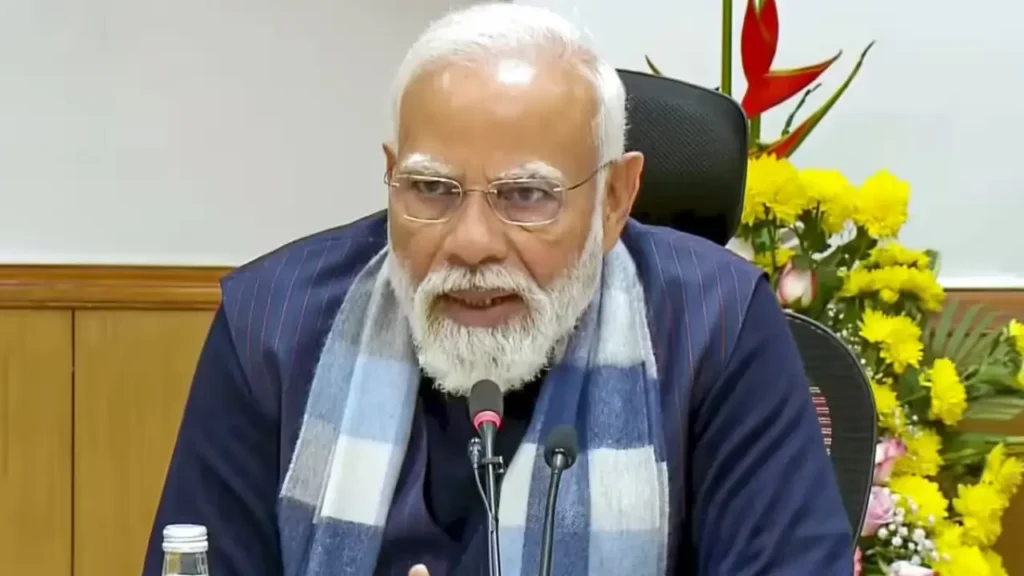
New Delhi: Prime Minister Narendra Modi recently led the 50th meeting of PRAGATI, the Pro-Active Governance and Timely Implementation platform, marking a decade of revolutionary changes in how India monitors and executes major infrastructure projects, flagship schemes, and public grievance redressal. Launched in 2015, PRAGATI has emerged as a cornerstone of cooperative federalism, fostering direct collaboration between the Centre, States, and Union Ministries through a cutting-edge digital interface.
PRAGATI stands as a multi-purpose and multi-modal platform that integrates accountability, transparency, and timely decision-making into the administrative process. It serves as a comprehensive, technology-enabled governance mechanism spanning all tiers of government. The platform embodies the “Team India Spirit,” with review meetings chaired by the Prime Minister himself, featuring direct engagement with state chief secretaries and central ministry officials. PRAGATI hosts key governance tools such as PM Gati Shakti, PARIVESH, and the PM Reference Portal, making it a robust ecosystem for real-time project oversight.
An external study by Oxford University’s Saïd Business School has hailed PRAGATI as a global benchmark and a “single source of truth” for real-time project monitoring, underscoring its international recognition and effectiveness in modern governance.
PRAGATI’s Transformative Impact on Cooperative Federalism and Project Execution
Since its inception, PRAGATI has exemplified cooperative federalism by encouraging the Centre and States to function as a unified team. Ministries and departments have moved beyond traditional silos to collaboratively address challenges. Approximately 500 Secretaries of the Government of India and Chief Secretaries of States have participated in these high-level PRAGATI meetings over the years.
The platform boasts an impressive project resolution rate, with around 94% of issues identified across various projects successfully resolved. This has significantly reduced time delays, cost overruns, and coordination failures in critical initiatives. PRAGATI has played a pivotal role in unlocking long-pending projects that had stalled for decades.
Notable examples include the Jammu–Udhampur–Srinagar–Baramulla rail link, originally approved in 1994 and finally commissioned in 2025; the Navi Mumbai International Airport; and the Bogibeel rail-cum-road bridge over the Brahmaputra. These successes highlight how direct Prime Ministerial intervention through PRAGATI can revive and accelerate infrastructure development.
Spotlight on Success Stories: Solapur Super Thermal Power Station
In a special focus on projects accelerated by PRAGATI, the Solapur Super Thermal Power Station in Maharashtra stands out as a prime illustration of the platform’s efficacy in strengthening regional energy security and meeting growing power demands. Developed at a cost of around Rs 11,406 crore, the plant has a total installed capacity of 1,320 megawatts. Work on the project began in March 2012.
By the time of the PRAGATI review on December 30, 2015, construction was still at a foundational stage. The Prime Minister’s direct involvement provided focused leadership and time-bound coordination, resolving critical bottlenecks and setting the project on a fast-track path. PM Modi specifically directed the Chief Secretary of Maharashtra to address rehabilitation issues by February 2016 and the Power Secretary to complete both units by January 2017.
One of the major enablers resolved through PRAGATI was the construction of a 115-kilometre make-up water pipeline from the Ujjani Dam, which proved essential for timely progress. By tackling land, water, rehabilitation, and transmission challenges at an early stage, PRAGATI ensured the full commissioning of the Solapur Super Thermal Power Station in March 2019.
Today, the plant delivers reliable power supply, bolsters energy security, and drives industrial and economic growth across the region, serving as a strong testament to the PRAGATI mechanism’s ability to handle complex infrastructure hurdles.
Bogibeel Bridge: From Stagnation to Strategic Lifeline
Another landmark project revived through PRAGATI is the Bogibeel Rail-cum-Road Bridge over the Brahmaputra River. Recognized as India’s longest and Asia’s second-longest rail-cum-road bridge, this 4.9-kilometre structure has become a vital lifeline for the northeastern region, enhancing connectivity between Assam and Arunachal Pradesh. It benefits around 50 lakh people in Upper Assam and Arunachal Pradesh by providing swift, uninterrupted, and all-weather access.
Sanctioned in 1997-98, construction commenced on April 21, 2002, during the Atal Bihari Vajpayee government. However, even after nearly 13 years, physical progress stood at only 72%, with costs escalating fivefold. The turning point came in May 2015 when Prime Minister Narendra Modi reviewed the project under PRAGATI.
Acknowledging its strategic importance for regional connectivity and national security, the Prime Minister instructed officials to adopt a mission-mode approach. This intervention dramatically accelerated progress, leading to the bridge’s completion and inauguration on December 25, 2018.
Cabinet Secretary TV Somanathan has emphasized that PRAGATI was instrumental in commissioning critical projects like the Bogibeel Bridge. Beyond civilian benefits, the bridge plays a crucial role in national security by enabling rapid movement of defence forces and equipment in the eastern region.
Key Insights from Cabinet Secretary on Challenges and Achievements
Speaking at a media briefing following the 50th PRAGATI meeting, Cabinet Secretary TV Somanathan provided detailed insights into the platform’s broader impact. The PRAGATI ecosystem has accelerated the implementation of more than 3,300 projects valued at over Rs 85 lakh crore. Of these, 382 projects were personally reviewed by the Prime Minister.
A total of 3,187 issues were raised related to these projects, with 2,958 resolved. Across the entire framework, 7,735 issues have been identified, and 7,156 resolved to date.
Somanathan highlighted that 35% of issues in big projects stem from land acquisition challenges. Another 20% arise from forest, wildlife, and environmental concerns, while 18% relate to right of use or way issues. Together, these three categories account for 73% of all problems encountered.
Notably, 42% of issues in the 382 PM-reviewed projects were linked to land acquisition. Despite these hurdles, Somanathan affirmed that there is no plan to change the land acquisition law. He stressed India’s democratic framework, which balances project completion with the interests of affected people and environmental protection.
In democracies like India, infrastructure development involves consultation, consent, and public involvement, unlike in some countries where faster implementation might come at the cost of individual rights. Somanathan argued against fundamental regulatory reforms, noting that procedural improvements are made as needed, but core processes of public consultation remain essential.
Large time and cost overruns have historically plagued India’s public projects due to inter-ministerial and Centre-State coordination gaps. PRAGATI, instituted a decade ago, directly addresses these by fast-tracking critical infrastructure, improving flagship scheme outcomes, and resolving citizen grievances.
The apex-level review meetings, chaired by the PM and attended by chief secretaries and central secretaries, create personal accountability. Officials make direct commitments to the Prime Minister on timelines, which they treat with utmost seriousness.
At the latest 50th meeting on Wednesday, five infrastructure projects from the road, railways, power, water resources, and coal sectors were discussed. Spanning five states, these projects have a cumulative cost exceeding Rs 40,000 crore. Some reviewed initiatives date back decades, such as the Jammu-Udhampur-Srinagar-Baramulla rail link, which began in 1995.
PRAGATI’s Enduring Legacy in Pro-Active Governance
As PRAGATI completes its 50th meeting, it continues to transform governance by enabling real-time monitoring and swift resolution of delays in key infrastructure projects and public grievances. Through direct Prime Ministerial review, the platform has instilled a culture of accountability while promoting seamless collaboration across government levels.
From powering regions with projects like Solapur Super Thermal Power Station to securing borders with bridges like Bogibeel, PRAGATI’s contributions underscore its role in building a stronger, more connected India. As the nation pursues ambitious development goals, this flagship initiative remains a model of pro-active, technology-driven, and inclusive governance.
Frequently Asked Questions (FAQs)
1. What is PRAGATI and when was it launched?
PRAGATI, which stands for Pro-Active Governance and Timely Implementation, is a multi-purpose and multi-modal technology-enabled platform designed to promote accountability, transparency, and timely decision-making across all levels of government. It was launched by Prime Minister Narendra Modi in 2015. The platform integrates key governance tools such as PM Gati Shakti, PARIVESH, and the PM Reference Portal, and serves as a comprehensive mechanism for real-time monitoring of projects and grievances.
2. How does PRAGATI work and what makes it unique?
PRAGATI functions through high-level review meetings chaired directly by the Prime Minister, where chief secretaries of states and secretaries of central ministries participate. This direct engagement fosters the “Team India Spirit” and exemplifies cooperative federalism by bringing the Centre, States, and Union Ministries together on a single digital interface. An external study by Oxford University’s Saïd Business School has recognized PRAGATI as a global benchmark and a “single source of truth” for real-time project monitoring. Its uniqueness lies in breaking silos, enabling direct Prime Ministerial intervention, and achieving a high resolution rate of around 94% for identified issues.
3. What has PRAGATI achieved in the last decade?
Since inception, PRAGATI has accelerated the implementation of over 3,300 projects worth more than Rs 85 lakh crore. A total of 7,735 issues have been raised under the framework, of which 7,156 have been resolved. The platform has helped reduce time delays, cost overruns, and coordination failures in major infrastructure projects. Notable long-pending projects unlocked include the Jammu–Udhampur–Srinagar–Baramulla rail link (approved in 1994, commissioned in 2025), Navi Mumbai International Airport, Bogibeel rail-cum-road bridge, and Solapur Super Thermal Power Station. Around 500 Government of India Secretaries and State Chief Secretaries have participated in these meetings.
4. Can you give examples of projects transformed by PRAGATI?
Yes, two standout examples are:
Bogibeel Rail-cum-Road Bridge (Assam-Arunachal Pradesh): India’s longest rail-cum-road bridge (4.9 km), sanctioned in 1997-98. Progress was only 72% by 2015 despite massive cost escalation. After PM Modi’s mission-mode directive in May 2015, it was completed and inaugurated in December 2018, boosting connectivity for 50 lakh people and national security.
Solapur Super Thermal Power Station (Maharashtra): Costing Rs 11,406 crore with 1,320 MW capacity, it was reviewed in December 2015 when construction was at a foundational stage. PM directions resolved rehabilitation and water pipeline issues, leading to full commissioning in March 2019.
5. What are the major challenges highlighted in PRAGATI reviews, and is the government planning changes?
According to Cabinet Secretary TV Somanathan, 35% of issues in large projects are due to land acquisition, 20% from forest, wildlife, and environmental concerns, and 18% from right of use/way problems – together accounting for 73% of all issues. Despite these being chronic hurdles causing delays and cost overruns, there is no plan to change the land acquisition law. The government emphasizes maintaining democratic balance through consultation, consent, and public involvement rather than overriding individual or environmental rights for faster execution. Procedural improvements are made as needed, but fundamental regulatory changes are not foreseen.