

New Delhi: Delhi and the National Capital Region (NCR) continue to experience some of the world’s most severe seasonal air pollution, with winter smog becoming a recurring public health emergency. In response to mounting judicial pressure, the Commission for Air Quality Management (CAQM) has released a detailed expert report that consolidates years of scientific findings to clearly identify the dominant causes of Delhi’s hazardous air quality. Prepared under directives from the Supreme Court in the historic M.C. Mehta vs. Union of India matter, the report provides a unified, evidence-based assessment of pollution sources and proposes actionable strategies for meaningful improvement.
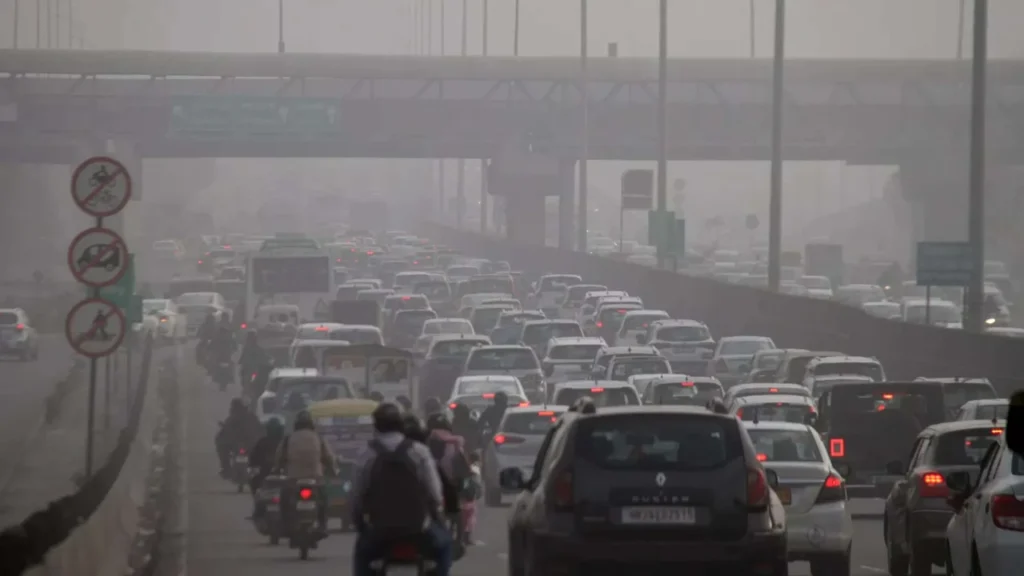
Supreme Court Rebuke Forces Clarity on Pollution Contributors
On January 6, 2026, the Supreme Court expressed deep dissatisfaction with the CAQM’s earlier efforts, describing the lack of precise identification of pollution sources and their proportionate contributions as a “complete failure of duty.” The bench directed the commission to complete a thorough source apportionment and identification exercise within two weeks and place the results in the public domain. Responding swiftly, the CAQM undertook a meta-analysis of source apportionment studies conducted between 2015 and 2025. By harmonizing divergent methodologies used in previous research, the commission has delivered a more consistent and reliable picture of what drives Delhi-NCR’s winter air pollution crisis.
Secondary Particulate Matter Dominates Winter Pollution
The most striking finding of the report is that secondary particulate matter constitutes the single largest contributor to Delhi’s winter pollution, accounting for approximately 27% of PM2.5 concentrations. These particles are not emitted directly from any source. Instead, they form in the atmosphere through complex chemical reactions involving precursor gases: sulfur dioxide (SO₂), nitrogen oxides (NOx), ammonia (NH₃), and volatile organic compounds (VOCs). The resulting aerosols—primarily ammonium nitrate and ammonium sulphate—are particularly hazardous because of their ability to penetrate deep into the lungs and enter the bloodstream, exacerbating respiratory, cardiovascular, and other health conditions.
A critical factor in secondary aerosol formation is ammonia. The report highlights that nearly 80% of ammonia emissions in India originate from agricultural practices, especially fertilizer application and livestock waste. In winter, when urban emissions of SO₂ and NOx mix with this ammonia under stagnant atmospheric conditions, the production of fine secondary particles surges, illustrating the strong rural-urban linkage in Delhi’s pollution problem.
Major Primary Emission Sources in Winter
Among directly emitted pollutants, the transport sector emerges as the leading contributor at 23%. High vehicle numbers, reliance on fossil fuels, traffic congestion, and inadequate maintenance all drive this share. Biomass burning ranks second at 20%, encompassing crop residue burning in neighbouring agricultural regions, open municipal waste burning, and domestic use of solid fuels for cooking and heating.
Dust—generated from unpaved roads, soil erosion, construction sites, and demolition waste—accounts for 15%. Industrial emissions, including those from thermal power plants and smaller units, contribute 9%. The remaining 6% falls under miscellaneous or “other” sources.
Clear Seasonal Differences in Pollution Profile
The pollution mix changes significantly between seasons. In summer, dust becomes the dominant contributor at 27%, followed by transport (19%), secondary particulate matter (17%), industry (14%), biomass burning (12%), and other sources (11%). Winter pollution, however, is shaped heavily by meteorological conditions rather than sudden emission spikes. Low wind speeds, a shallow planetary boundary layer, temperature inversions, elevated humidity, and atmospheric stagnation trap pollutants close to the ground, intensifying smog episodes.
The report further notes that roughly two-thirds of Delhi’s PM2.5 originates from transboundary sources outside the city boundaries, reinforcing the necessity for coordinated action across Haryana, Uttar Pradesh, Rajasthan, and other NCR states.
Air Quality Trends Show Modest Progress but Large Gaps Remain
Since 2016, both PM2.5 and PM10 levels in Delhi have exhibited a gradual decline and stabilization. While this indicates that some policy measures are beginning to yield results, concentrations still remain substantially higher than the annual National Ambient Air Quality Standards (NAAQS), leaving a considerable distance to travel before the air becomes safe for residents.
Enforcement and Systemic Challenges Across Sectors
The CAQM report candidly identifies persistent weaknesses that undermine pollution control efforts:
- Vehicular emissions: The existing Pollution Under Control (PUC) certification system does not measure particulate matter from tailpipes, making it an incomplete tool. Many vehicles operate without valid certificates, receive poor maintenance, or exceed emission norms.
- Industrial pollution: Enforcement is difficult due to the large number of small, unorganized units operating in unauthorized zones. Illegal burning of non-hazardous waste (such as plastics and rubber) and uncontrolled fugitive emissions worsen the situation.
- Construction and demolition: Daily generation of large waste volumes, often illegally dumped along roadsides and in open areas, significantly adds to particulate matter.
- Dispersed sources: Increased dependence on diesel generator sets due to unreliable grid power, gaseous emissions from regional airports, and continued use of solid fuels in hotels and restaurants without proper emission controls all contribute to the overall burden.
New High-Resolution Emission Inventory Underway
To overcome past inconsistencies and build a stronger foundation for policy, the CAQM has commissioned a fresh emission inventory and source apportionment study. A consortium led by the Automotive Research Association of India (ARAI), Pune—along with partners from IIT Delhi, The Energy and Resources Institute (TERI), and the Indian Institute of Tropical Meteorology (IITM), Pune—will map emissions at a high resolution of 500 × 500 metre grids across major sectors, using 2026 as the base year.
This updated inventory will incorporate recent activity data, refined methodologies, and the effects of ongoing policy interventions. The results will be integrated into the Air Quality Early Warning System (EWS) and Decision Support System (DSS) to improve real-time forecasting and enable more targeted mitigation strategies.
15 Phased Measures Presented to Supreme Court
On January 21, 2026, the CAQM informed the Supreme Court that vehicular pollution remains the single largest direct contributor to deteriorating air quality in Delhi-NCR. The commission recommended the following 15 long-term measures for phased implementation:
- Time-bound phasing out of high-pollution-potential vehicles.
- Strengthening PUC 2.0 with remote sensing for on-road monitoring.
- Expanding regional rail and metro networks with additional lines and stations.
- Establishing multi-modal transport hubs linking metro and regional rapid transit.
- Improving last-mile connectivity and real-time passenger information systems.
- Revising electric vehicle policies to accelerate zero-emission transitions, including higher incentives for scrapping old vehicles.
- Rapid expansion of EV charging infrastructure, including battery swapping stations.
- Permitting ARAI/ICAT-certified retrofitting of vehicles to electric.
- Augmenting city bus services with e-buses and CNG fleets according to MoHUA benchmarks.
- Developing CNG/LNG fuelling networks across NCR and highways for long-haul commercial vehicles.
- Installing ANPR cameras and automated RFID for multi-lane free-flow toll collection at Delhi entry points.
- Deploying integrated traffic management systems in key NCR cities including Noida, Greater Noida, Ghaziabad, Meerut, Gurugram, Faridabad, and Sonipat.
- Implementing comprehensive parking management plans.
- Imposing higher environmental protection charges.
- Intensifying enforcement through technology such as ANPR, RFID, remote sensing, and AI-driven surveillance.
Additional recommendations include augmenting waste-to-energy plants, introducing barrier-free toll systems, rationalizing the Environment Compensation Charge, and mandating annual action plans by NCR states to ensure accountability.
Moving Toward Cleaner Air: Public Consultation and Regional Coordination
The CAQM has invited public suggestions on the report until February 10, 2026, encouraging stakeholders to contribute ideas for refining these strategies. With continued Supreme Court oversight and a renewed emphasis on multi-sectoral, science-driven interventions—including agriculture, transport, waste management, and energy—these measures represent a comprehensive roadmap.
Effective implementation will be essential to reduce both primary emissions and secondary aerosol formation, ultimately delivering healthier air for millions of residents across Delhi-NCR.
FAQs
1. What is the single largest contributor to air pollution in Delhi during winter, according to the CAQM report?
Answer: Secondary particulate matter is the largest contributor, accounting for approximately 27% of PM2.5 during winter months. These are fine particles formed in the atmosphere through chemical reactions of precursor gases (SO₂, NOx, NH₃, and VOCs) rather than being directly emitted from any source. The report highlights that ammonium nitrate and ammonium sulphate aerosols are common examples of these secondary particles.
2. Which sector is the biggest source of direct (primary) emissions in Delhi-NCR’s winter pollution?
Answer: The transport sector is the largest primary source, contributing 23% to winter pollution. This includes emissions from cars, buses, trucks, two-wheelers, and other vehicles due to high vehicle density, fossil fuel use, congestion, and inadequate maintenance. Biomass burning (crop residue, municipal waste, domestic fuel) comes second at 20%, followed by dust (15%) and industry (9%).
3. Why does air pollution become much worse in winter in Delhi even if emissions don’t suddenly increase?
Answer: Winter pollution spikes are driven mainly by meteorological conditions, not a sharp rise in emissions. Low wind speeds, a shallow planetary boundary layer, temperature inversions, high humidity, and atmospheric stagnation trap pollutants close to the ground, preventing them from dispersing. The CAQM report emphasizes that these weather factors, combined with transboundary pollution (about two-thirds of Delhi’s PM2.5 comes from outside the city), are the primary reasons for severe smog episodes.
4. What new study has the CAQM launched to better understand and control air pollution in Delhi-NCR?
Answer: The CAQM has commissioned a high-resolution emission inventory and source apportionment study with a grid size of 500 × 500 metres, using 2026 as the base year. A consortium led by the Automotive Research Association of India (ARAI), Pune — along with IIT Delhi, TERI, and IITM Pune — will carry out the work. The updated inventory will use recent activity data, improved methods, and account for current policies. The results will be integrated into the Air Quality Early Warning System (EWS) and Decision Support System (DSS) to improve forecasting and design more effective, targeted interventions.
5. What are some of the key long-term measures the CAQM has recommended to the Supreme Court to reduce air pollution in Delhi-NCR?
Answer: On January 21, 2026, the CAQM presented 15 phased long-term measures to the Supreme Court, with a strong focus on transport reforms. Key recommendations include:
- Time-bound phasing out of high-emission vehicles
- Upgrading to PUC 2.0 with remote sensing for on-road monitoring
- Expanding metro, regional rail, and e-bus/CNG bus fleets
- Accelerating transition to zero-emission vehicles through revised EV policies and scrappage incentives
- Rapidly expanding EV charging and battery swapping infrastructure
- Installing ANPR cameras, RFID, and free-flow toll systems at Delhi borders
- Developing integrated traffic management and parking plans across NCR cities
- Imposing higher environmental charges and using AI-based enforcement
Additional suggestions include more waste-to-energy plants, barrier-free toll systems, rationalized Environment Compensation Charges, and mandatory annual action plans by NCR states.