

New Delhi: In a major push to combat India’s escalating road safety crisis, the United Nations officially launched a dedicated financing initiative on February 24, 2026, targeting sustainable road safety measures across four strategically selected states. Coinciding with the visit of Jean Todt, the UN Secretary-General’s Special Envoy for Road Safety, the project underscores global commitment to addressing what Todt described as a “silent pandemic” claiming hundreds of lives daily in the country.
Project Overview: Sustainable Financing for Road Safety in India
The initiative, formally titled Sustainable Financing for Road Safety in India: A Collaborative Approach, is backed by the UN Road Safety Fund (UNRSF). It aims to create a coordinated, long-term financing framework that can support effective road safety interventions at both national and state levels.
The project partners directly with the governments of Rajasthan, Kerala, Tamil Nadu, and Assam. These states, representing diverse geographical, demographic, and traffic patterns—from arid northern highways to southern coastal routes and northeastern terrains—will serve as pilot regions. Success in these areas is expected to provide a replicable model for nationwide rollout.
Coordinated by the UN Resident Coordinator’s Office in India, the program receives vital technical assistance from key UN agencies: the World Health Organization (WHO), UNICEF, and the UN Economic and Social Commission for Asia and the Pacific (UNESCAP). Their expertise will guide efforts in policy design, institutional capacity building, enforcement improvements, and enhanced post-crash response systems.
A primary goal is to build robust capacities at national and sub-national levels for implementing comprehensive road safety action plans. This includes exploring innovative funding sources such as dedicated road safety funds, potential road safety bonds, targeted taxes, and public-private partnerships (PPP). By strengthening financial mechanisms, the project seeks to ensure consistent resource allocation for prevention, infrastructure upgrades, and emergency care.
The overarching objective aligns with the Decade of Action for Road Safety 2021–2030, which calls for at least a 50% reduction in road traffic fatalities and serious injuries globally by 2030. In India, achieving this target would save tens of thousands of lives annually and mitigate massive economic losses.
India’s Alarming Road Safety Crisis
India continues to grapple with one of the world’s highest road traffic fatality burdens. According to the latest Ministry of Road Transport and Highways (MoRTH) data for 2022-23, approximately 1.68 lakh fatalities were recorded in road accidents. This translates to roughly 600 deaths per day, or about 25 every hour.
The demographic impact is particularly severe: the majority of victims belong to the 18-45 years age group, representing the nation’s most productive workforce. Two-wheeler users constitute the largest share of fatalities, reflecting the widespread reliance on motorcycles and scooters for daily commuting. Over-speeding remains the leading cause, compounded by factors such as poor road engineering, inadequate signage, weak enforcement, substandard vehicle fitness, and limited emergency medical response.
Economically, road crashes impose a heavy toll. Official estimates indicate annual losses equivalent to around 3% of GDP due to healthcare expenses, lost productivity, property damage, and long-term disability care. Broader assessments, including indirect societal costs, suggest the figure could approach 7% of GDP.
Systemic gaps exacerbate the problem. Enforcement remains inconsistent, infrastructure deficiencies persist—especially for vulnerable road users like pedestrians and cyclists—and trauma care systems are often inadequate, leading to higher fatality rates among the injured.
Government Initiatives to Strengthen Road Safety
The Indian government has implemented several key measures to address these challenges. The Motor Vehicles Amendment Act, 2019 introduced stricter penalties, enhanced accountability, and improved governance for traffic violations to promote deterrence.
The National Road Safety Strategy 2018-2030 establishes a comprehensive framework aimed at halving fatalities by the decade’s end. The Integrated Road Accident Database (IRAD), developed jointly by MoRTH and the Ministry of Home Affairs, provides a unified platform for crash data collection, analysis, and policy formulation.
Additionally, the State Support Programme for Strengthening Road Safety—a six-year centrally sponsored scheme—targets 14 high-fatality states with a funding commitment of ₹7,270 crore from the World Bank, Asian Development Bank, and the Government of India. These efforts focus on engineering improvements, enforcement, and emergency care enhancements.
Role of the UN Road Safety Fund and Global Commitments
Established in April 2018 in New York as a Multi-Partner Trust Fund following a UN General Assembly resolution, the UNRSF mobilizes voluntary resources to support low- and middle-income countries in tackling road safety challenges. It prioritizes evidence-based policies, legislative reforms, and capacity-building projects while collaborating with governments, civil society, and the private sector to advance Sustainable Development Goals related to health, safe infrastructure, and sustainable cities.
The Indian project launch follows the Declaration of Marrakesh, adopted at the 4th Global Ministerial Conference on Road Safety in 2025. This declaration renewed calls for strong political commitment, sustainable financing streams, and adoption of a safe-system approach that anticipates human error and designs roads, vehicles, and behaviors to minimize harm.
Launch of the ‘Make A Safety Statement’ Global Campaign in India
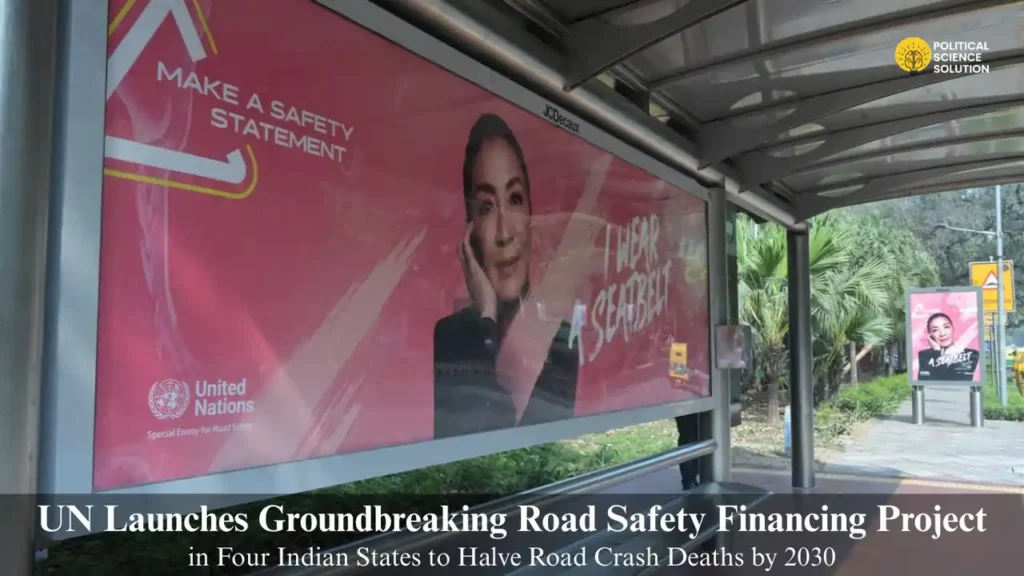
During the same event, Jean Todt unveiled the Indian chapter of the UN-JCDecaux global awareness campaign Make A Safety Statement. The initiative promotes simple, high-impact behaviors: wearing seat belts and helmets consistently, adhering to speed limits, and avoiding mobile phone use while driving.
Celebrities and influencers amplify these messages to drive behavioral change. Todt emphasized that his February 19–25, 2026 visit to India highlighted the UN’s resolve to accelerate progress during the Second Decade of Action for Road Safety.
Path Forward: A Multi-Pronged Strategy for Safer Roads
Jean Todt stressed critical focus areas for India: intensified public education, rigorous enforcement, mandatory vehicle fitness checks, improved road signage, and strengthened post-crash care. He reiterated that the world—and India specifically—is not yet on track to meet the 2030 targets, urging immediate, collective action.
By integrating sustainable financing with technical support, capacity building, and awareness efforts, this UN-backed project offers a holistic pathway to safer roads. If successful in the pilot states, it could transform national road safety governance, protect vulnerable users, preserve economic productivity, and honor the lives lost to preventable crashes.
FAQs
1. What is the UN Road Safety Financing Project in India, and when was it launched?
The project, officially titled Sustainable Financing for Road Safety in India: A Collaborative Approach, is a new initiative funded by the United Nations Road Safety Fund (UNRSF). It was officially launched on February 24, 2026, in New Delhi during a high-profile event attended by Jean Todt, the United Nations Secretary-General’s Special Envoy for Road Safety. The project aims to establish a coordinated and sustainable financing framework for road safety measures, strengthen governance, build institutional capacities at national and state levels, and support the effective implementation of road safety action plans to reduce fatalities and serious injuries.
2. Which Indian states are involved in this project, and why were they selected?
The project is being implemented in partnership with four states: Rajasthan, Kerala, Tamil Nadu, and Assam. These states were chosen as pilot regions due to their diverse geographical, demographic, and traffic conditions, which allow for testing scalable solutions across different contexts—from northern highways and southern coastal routes to northeastern terrains. The four states will serve as models for developing structured road safety financing mechanisms that can later be replicated nationwide.
3. What are the main objectives and focus areas of the project?
The primary objectives include building national and sub-national capacities for implementing road safety action plans, reducing road traffic fatalities and serious injuries (in line with the global target of a 50% reduction by 2030 under the Decade of Action for Road Safety 2021–2030), and creating long-term sustainable financing solutions. Key focus areas encompass policy design, institutional strengthening, improved enforcement mechanisms, innovative funding options (such as dedicated road safety funds, road safety bonds, dedicated taxes, and public-private partnerships), and enhanced post-crash response and trauma care systems. The project is coordinated by the UN Resident Coordinator’s Office in India and receives technical support from the World Health Organization (WHO), UNICEF, and the UN Economic and Social Commission for Asia and the Pacific (UNESCAP).
4. Why is this project urgently needed in India, and what are the current road safety statistics?
India faces one of the world’s highest road crash burdens, with approximately 1.68 lakh fatalities reported in 2022-23 (the latest available MoRTH data), equating to roughly 600 deaths daily or 25 every hour. The majority of victims are in the 18-45 age group (the most economically productive segment), with two-wheeler riders suffering the largest share of deaths, primarily due to over-speeding. Road crashes cost the economy around 3% of GDP annually (some estimates suggest up to 7% when including healthcare, productivity losses, and long-term disabilities). Persistent issues include weak enforcement, poor road engineering and signage, inadequate vehicle fitness checks, and limited emergency trauma care—making preventable crashes a major public health and economic crisis.
5. How does this project connect to broader global and national road safety efforts?
The initiative aligns with the Second Decade of Action for Road Safety (2021–2030) and the Declaration of Marrakesh (adopted at the 4th Global Ministerial Conference on Road Safety in 2025), which emphasize political commitment, sustainable financing, and a safe-system approach. It complements India’s existing measures, such as the Motor Vehicles Amendment Act, 2019 (stricter penalties), the National Road Safety Strategy 2018-2030 (50% fatality reduction target), the Integrated Road Accident Database (IRAD), and the State Support Programme for Strengthening Road Safety (₹7,270 crore funding in 14 high-fatality states). The launch coincided with the Indian rollout of the UN-JCDecaux global campaign #MakeASafetyStatement, which promotes simple behaviors like wearing helmets and seat belts, obeying speed limits, and avoiding mobile phone use while driving—further amplifying awareness efforts.