

New Delhi: Ties between India and Bangladesh have sunk to their lowest ebb in years, triggered by brutal attacks on religious minorities, heated anti-India protests, and a surge in political activity ahead of Bangladesh’s February 2026 elections. The rapid deterioration has seen visa services halted, envoys summoned, and sharp exchanges over security and accountability.
Trigger Events: Deaths That Ignited Widespread Unrest
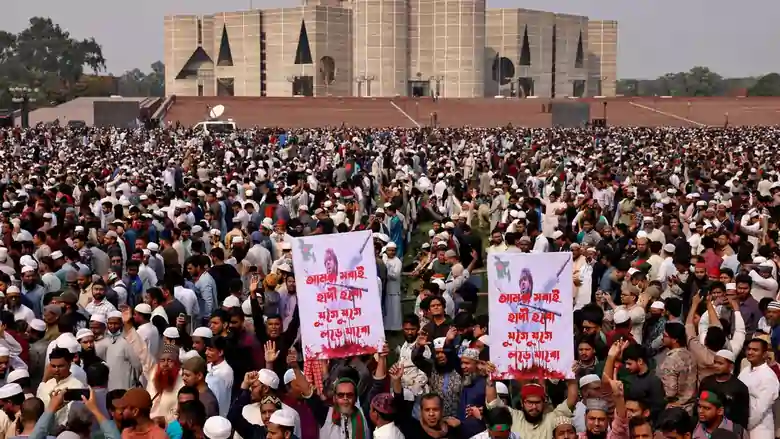
The crisis escalated after the death of Sharif Osman Hadi, a key student leader and Inqilab Moncho spokesperson, who died from gunshot wounds in Singapore on December 18. Protests erupted across Bangladesh, with crowds blocking major intersections and demanding justice. Some demonstrators alleged suspects linked to the former Awami League had fled to India, fueling anti-India rhetoric—claims authorities have not substantiated.
Hours later, Dipu Chandra Das, a 27-year-old Hindu garment worker in Mymensingh, was lynched over blasphemy accusations. A mob beat him, tied his body to a tree, and set it ablaze. Graphic videos spread rapidly, provoking outrage in India and silent protests in Bangladesh.
A separate incident in Rajbari saw Amrit Mondal (alias Samrat) killed by locals amid extortion allegations. The interim government insisted it was not communal, highlighting recovered weapons and labeling Mondal a criminal.
Attacks on Institutions and Rising Extremism
Protests turned violent, targeting perceived pro-India entities. Mobs vandalized and torched offices of The Daily Star and Prothom Alo newspapers, plus a cultural institution. Security forces blocked marches on India’s High Commission in Dhaka and faced stone-pelting at the Assistant High Commission in Chittagong.
Analysts note a post-2024 rise in radical influence, with Sufi shrines desecrated, cultural events curtailed, and restrictions on women’s activities in some areas. Hardline groups have gained ground, often justifying attacks by labeling targets “pro-India.”
Diplomatic Fallout and Mutual Accusations
Both nations suspended visa services in multiple cities and summoned each other’s high commissioners over mission security. Bangladesh objected to protests outside its Delhi premises, while India dismissed narratives linking it to fugitives.
Former diplomats expressed alarm. Riva Ganguly Das hoped tensions would not worsen amid volatility, while Humayun Kabir highlighted unprecedented mistrust, urging adherence to diplomatic norms.
India’s Strong Response on Minority Violence
On December 26, India’s Ministry of External Affairs cited over 2,900 documented attacks on minorities—Hindus, Christians, Buddhists, and others—since the interim government’s inception, per independent sources like the Bangladesh Hindu Buddhist Christian Unity Council.
Spokesperson Randhir Jaiswal condemned Das’s “gruesome” killing as a “grave concern,” rejecting dismissals as exaggeration or political violence. India called for justice, reaffirmed ties with Bangladesh’s people, and advocated “free, fair, inclusive, and participatory” elections.
Tarique Rahman’s Homecoming and Electoral Outlook
December 25 marked the return of BNP acting chairman Tarique Rahman after 17 years in London exile. Greeted by massive crowds, he visited his father Ziaur Rahman’s grave, met ailing mother Khaleda Zia, and rallied supporters, pledging a safe, inclusive Bangladesh embracing all communities.
With Awami League banned, BNP is favored to win February polls. However, potential alliances—such as the National Citizen Party discussing ties with Jamaat-e-Islami—raise concerns over Islamist influence.
Expert Views: Jamaat’s Growing Shadow
Former High Commissioner Veena Sikri described the 2024 change as a planned operation involving Jamaat-e-Islami, historically tied to Pakistan. Outcomes include dismantling 1971 liberation symbols, minority clampdowns with allegations of killings and property grabs, and economic decline—halved growth, factory closures, rampant unemployment, and high inflation.
Tactics involve mob pressure on institutions and media attacks. Sikri warned elections excluding major parties would lack fairness, urging inclusive polls.
Reactions in India: Protests and Celebrity Outcry
Demonstrations targeted Bangladeshi missions in Kolkata and Delhi, with arrests followed by bail. Political leaders demanded action, noting shrinking Hindu populations regionally.
Celebrities amplified concerns: Janhvi Kapoor called violence “barbaric,” Kajal Aggarwal urged attention to Hindu safety, and Jaya Prada voiced heartbreak over brutality. Cross-party figures condemned mob actions universally.
Strategic Concerns and Path Ahead
Indian assessments label Bangladesh developments the greatest challenge since 1971, citing renewed Pakistan military ties near borders.
Experts stress interdependence—economic proximity and past security cooperation. India continues aid, like recent rice exports, signaling engagement with elected leadership.
As elections near under Muhammad Yunus’s interim rule—facing law-and-order criticism—inclusive voting and minority protection remain key. Unchecked divisions risk harming Bangladesh’s secular elements most, while stability is vital for regional security.
Both neighbors, intertwined by history and geography, must prioritize dialogue and restraint to avert lasting damage.
FAQs
1. What triggered the latest crisis in India-Bangladesh relations?
The crisis escalated after the death of student leader Sharif Osman Hadi on December 18, 2025, leading to protests with anti-India rhetoric. This was followed by the lynching of Hindu youth Dipu Chandra Das in Mymensingh over blasphemy allegations, sparking outrage in India and counter-protests in Bangladesh.
2. Why have relations between India and Bangladesh deteriorated so sharply?
Long-standing resentment over India’s perceived influence during Sheikh Hasina’s rule, combined with her asylum in India after her 2024 ousting, has fueled tensions. Recent violence against minorities, attacks on perceived pro-India institutions, and mutual accusations over fugitive suspects and diplomatic security have deepened the divide.
3. What is India’s official position on the violence against minorities in Bangladesh?
On December 26, 2025, India’s Ministry of External Affairs condemned the attacks, citing over 2,900 documented incidents against Hindus, Christians, Buddhists, and others since the interim government took power. India described the hostility as a “grave concern” and called for justice and inclusive elections.
4. Who is Tarique Rahman and why is his return significant?
Tarique Rahman, acting chairman of the Bangladesh Nationalist Party (BNP) and son of former President Ziaur Rahman, returned to Dhaka on December 25, 2025, after 17 years in London exile. His homecoming has energized BNP supporters ahead of February 2026 elections, where the party is expected to perform strongly amid the ban on the rival Awami League.
5. What does India want from the upcoming Bangladesh elections?
India has repeatedly called for “free, fair, inclusive, and participatory” elections in February 2026, implicitly opposing the exclusion of major parties like the Awami League. New Delhi believes only fully inclusive polls can restore stability and address ongoing challenges, including minority protection and bilateral ties.