

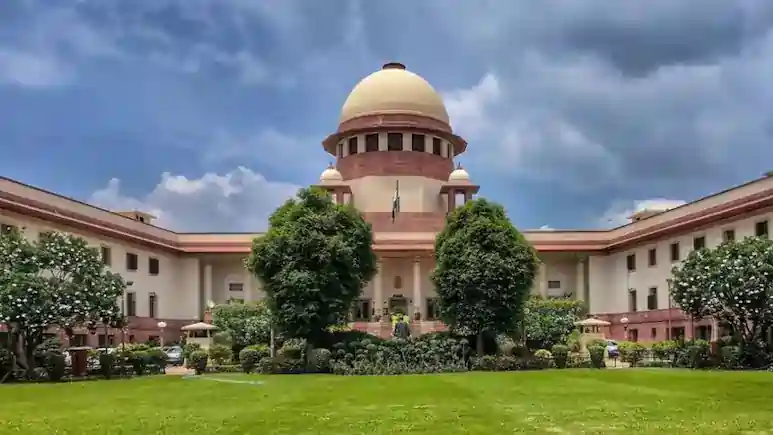
New Delhi: In a landmark pronouncement, the Supreme Court of India on Tuesday ruled that illegal immigrants and intruders entering the country without valid documentation have no legal rights within Indian territory. The sharp observation came from a Division Bench comprising Chief Justice Surya Kant and Justice Joymalya Bagchi while hearing a habeas corpus petition alleging the disappearance of several Rohingya individuals from official custody.
The Bench held that the nation’s resources, benefits and amenities must be concentrated on Indian citizens rather than on persons who enter illegally. “A red carpet cannot be rolled out for those who enter the country illegally,” the Court observed.
Illegal Entry Negates All Legal Rights: Key Takeaways from the Verdict
- Rohingyas cannot be classified as “refugees” without an official declaration by the Government of India.
- Illegal entry itself strips a person of any claim to legal rights or constitutional protections available to lawful residents.
- While baseline humanitarian treatment is assured and custodial torture is prohibited, illegal immigrants cannot demand enforceable legal rights.
- National priorities, citizen welfare and border security, particularly in the Northeast, must take precedence over the claims of illegal entrants.
Background of the Case
The observations were made during the hearing of a habeas corpus petition alleging that several Rohingya detainees had mysteriously disappeared from the custody of authorities. The petitioners sought production of the missing individuals before the Court and accountability from the concerned agencies.
The Bench has directed the authorities to file a detailed affidavit explaining the circumstances and current whereabouts of the persons named in the petition.
India’s Refugee Policy: No Statutory Framework, Only Executive Discretion
India is not a signatory to the 1951 Refugee Convention or its 1967 Protocol, which define refugee status and spell out comprehensive rights. Despite this, India adheres to the principle of non-refoulement under customary international law.
Foreigners entering or staying without valid documents are governed by:
- The Foreigners Act, 1946
- Registration of Foreigners Act, 1939
- Passport (Entry into India) Act, 1920 & Passport Act, 1967
- Citizenship Act, 1955
In the absence of a dedicated refugee law, India follows an ad-hoc, executive-driven approach described as “strategic ambiguity”.
Refugee Management Structure
- Direct control by Union Ministry of Home Affairs: Tibetan and Sri Lankan Tamil refugees
- UNHCR-managed groups: Rohingyas, Afghans, other Myanmarese nationals and African nationals
Historically Recognised Refugee Communities
India has formally extended refugee or asylum-like status to:
- Tibetans (since 1959)
- Sri Lankan Tamils (multiple waves since 1983)
- Chakma and Hajong refugees
- Select Afghan Hindus and Sikhs post-2021
Notably, Rohingyas have never been officially declared refugees by the Government of India despite UNHCR issuing refugee cards to thousands.
Implications of the Judgment
Legal experts believe the ruling will have wide-ranging consequences:
- Courts may demand proof of official refugee recognition before entertaining rights-based petitions filed on behalf of undocumented foreigners.
- State governments in border areas are likely to receive stronger judicial backing for detention and deportation measures.
- Future habeas corpus petitions concerning illegal immigrants could face stricter scrutiny.
The verdict provides the clearest judicial endorsement yet of the Centre’s long-standing position that illegal entrants cannot claim fundamental or statutory rights merely by virtue of physical presence on Indian soil.
Balancing Sovereignty and Humanity
The Bench clarified that the ruling does not sanction ill-treatment. Illegal immigrants remain protected from torture and inhumane conditions, and the principle of non-refoulement continues to apply where relevant. However, access to state benefits and enforceable legal rights remains restricted to lawful entrants and formally recognised refugees.
Reactions
While the full text of the order is awaited, the oral observations have already triggered debate. National security commentators have welcomed the ruling as a “much-needed affirmation of sovereignty”. Human rights organisations have cautioned that the judgment should not be misused to deny basic dignity to vulnerable populations.
The Ministry of Home Affairs, which has consistently classified Rohingyas as illegal immigrants rather than refugees, is expected to rely heavily on this verdict in ongoing deportation proceedings.
The matter will come up for further hearing after the authorities file their response regarding the allegedly missing Rohingya detainees.
FAQs
1. Does this Supreme Court ruling mean illegal immigrants, including Rohingyas, can now be treated inhumanely or tortured in custody?
No. The Bench explicitly clarified that even illegal entrants are entitled to baseline humanitarian treatment and cannot be subjected to custodial torture or inhumane conditions. Basic human dignity remains protected.
2. Can Rohingyas still claim they are “refugees” in Indian courts after this judgment?
No. The Supreme Court has ruled that Rohingyas (or any group) cannot be classified as refugees without an official declaration by the Government of India. UNHCR-issued refugee cards do not confer legal refugee status in Indian law.
3. Is India violating international law by saying illegal immigrants have no rights?
No. India is not a signatory to the 1951 Refugee Convention or its 1967 Protocol. The only international obligation the Court and India recognize in this context is the principle of non-refoulement under customary international law (not returning a person to persecution), and that principle remains intact.
4. Will this ruling speed up deportation of Rohingyas and other illegal immigrants?
Very likely. The judgment gives strong judicial backing to the government’s long-standing position that illegal immigrants have no legal right to remain in India. Courts are now expected to insist on proof of official refugee recognition before blocking deportation or granting relief.
5. Does the ruling apply only to Rohingyas or to all illegal immigrants?
It applies to all illegal immigrants and intruders who enter or stay in India without valid documentation, regardless of nationality. The observations were made in a Rohingya-related case, but the principle is universal.