

New Delhi: India has achieved a stunning victory in the International Maritime Organization Council elections for the 2026-27 term, securing the top position in Category B by receiving 154 out of 169 valid votes. This outcome positions the country among the 10 nations recognized for their substantial involvement in international seaborne trade.
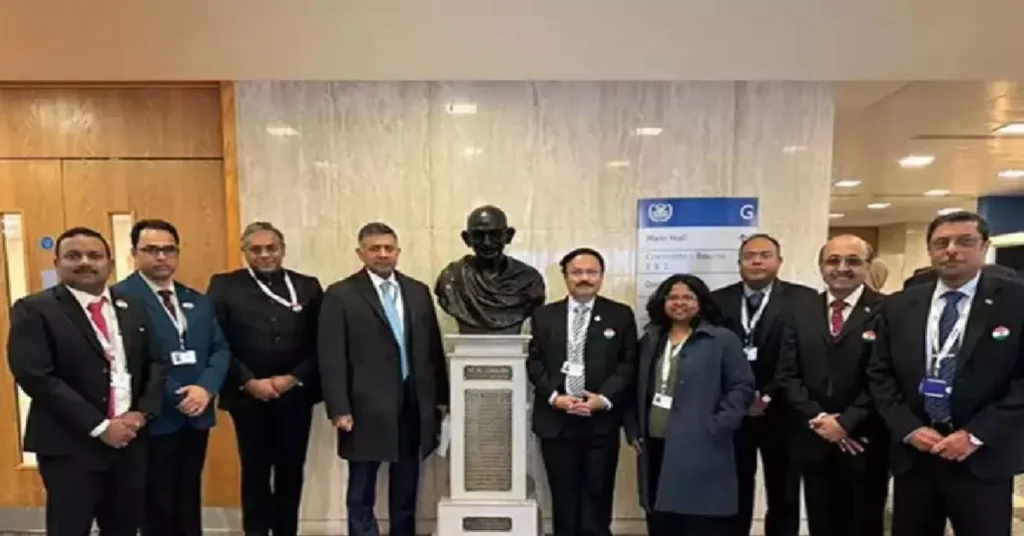
The elections took place on Friday at the 34th session of the IMO Assembly held in London. Union Minister of Ports, Shipping and Waterways Sarbananda Sonowal led the Indian delegation and described the result as a proud moment for the nation’s maritime sector. He attributed the strong support to the global community’s trust in the leadership driving sustainable maritime development.
Understanding the IMO Council Framework
The IMO Council functions as the executive body of the organization, consisting of 40 elected members divided into three categories. Category A includes 10 countries with the greatest interest in providing international shipping services. Category B covers 10 countries with the largest interest in international seaborne trade. Category C encompasses 20 countries offering a wide geographical representation along with expertise in maritime technology.
This structure ensures balanced decision-making on issues affecting global shipping. The Council manages the IMO’s budget, approves work programs and sets priorities for regulatory development. India’s placement in Category B allows it to advocate for policies that support efficient and secure trade routes essential for economic growth.
Details of the Election Process and Outcome
During the voting at the IMO Assembly, member states cast ballots to select Council members for the next two years. India emerged as the leader in its category, marking the second consecutive term at the top. The 154 votes reflect broad consensus among the 175 member countries present.
Sonowal noted that this mandate validates ongoing national initiatives aimed at modernizing ports and adopting eco-friendly practices in shipping. The minister connected the success to recent events, including the launch of India Maritime Week 2025, which brought together representatives from more than 100 countries to discuss cooperative opportunities.
Historical Background of the International Maritime Organization
The IMO traces its origins to 1948 when it was established as the Inter-Governmental Maritime Consultative Organization. In 1982, the name changed to the International Maritime Organization to better align with its evolving responsibilities. Headquartered in London, it operates as a specialized agency of the United Nations.
The organization’s primary mandate involves establishing regulations that promote safe navigation and protect the marine environment. These rules must be practical, equitable and applicable across all nations to maintain uniformity in the shipping sector, which carries the majority of world trade.
Key Conventions Addressing Maritime Safety and Pollution
Several major agreements under the IMO framework play a crucial role in preventing accidents and environmental damage. The International Convention for the Prevention of Pollution from Ships, known as MARPOL, addresses multiple sources of pollution including oil spills, solid waste and emissions from exhaust systems. It requires vessels to install specific equipment and follow strict discharge protocols.
Another important treaty is the Ballast Water Management Convention, which targets the unintentional transfer of invasive species through ships’ ballast water. Compliance involves installing treatment systems that neutralize harmful organisms before releasing water into ports.
The International Convention for the Safety of Life at Sea, or SOLAS, outlines essential requirements for ship construction, emergency procedures and navigation aids. It includes provisions for fire safety measures, sufficient life-saving equipment and reliable communication tools.
The International Convention on Standards of Training, Certification and Watchkeeping for Seafarers establishes uniform qualifications for personnel working on ships. This covers training in areas such as cargo handling, damage control and medical care at sea.
In addition, the 2023 IMO Strategy on Reduction of GHG Emissions from Ships sets ambitious targets for lowering carbon output from the maritime industry. The plan calls for reaching net-zero emissions by or around 2050, with interim goals to reduce emissions by specific percentages in the coming decades.
India’s Strategic Role and Recent Achievements
This election success highlights India’s expanding influence in international maritime affairs. The country has invested heavily in upgrading its port facilities, increasing cargo handling capacity and developing domestic shipbuilding capabilities. These efforts align with long-term plans to strengthen the sector through 2047.
Sonowal and Minister of State Shantanu Thakur have guided initiatives that emphasize integration of advanced technologies and sustainable practices. Discussions held on the margins of the Assembly involved talks with various member states and IMO officials on potential collaborations in training programs, joint research and capacity enhancement.
The victory comes at a time when global shipping faces challenges such as fluctuating fuel prices, supply chain bottlenecks and stricter environmental norms. India’s position enables it to contribute solutions that benefit both advanced economies and developing regions.
Implications for Global Shipping Governance
Membership in the IMO Council provides India with a platform to shape future regulations on topics ranging from digital navigation systems to alternative fuel adoption. As a major importer and exporter, the nation can push for measures that facilitate smoother trade flows while minimizing operational costs.
The strong vote count indicates recognition of India’s reliable track record in implementing IMO standards domestically. Major ports have adopted automated monitoring for compliance, and training centers have expanded to meet demand for skilled crews.
Broader Context of India’s Maritime Development
National programs have transformed coastal infrastructure, enabling faster turnaround times for vessels and reduced logistics expenses. Investments in green technologies, such as shore power connections and low-emission vessels, demonstrate commitment to international environmental goals.
The recent maritime week event served as a forum for sharing best practices and forging partnerships. Participants explored topics like resilient supply chains and innovative financing for port expansions, reinforcing India’s role as a convenor in the sector.
Future Priorities Under India’s Leadership
Looking forward, India plans to focus on accelerating the transition to cleaner energy sources in shipping. This includes support for fuels like hydrogen and biofuels alongside improvements in energy efficiency for existing fleets.
Collaboration with international partners will extend to areas such as cybersecurity for shipping networks and standardized protocols for autonomous vessels. These steps aim to prepare the industry for emerging technologies while upholding safety standards.
Sonowal emphasized that the Council’s composition reflects a collective commitment to a balanced approach in regulation. India’s involvement ensures perspectives from high-volume trade nations inform decisions that impact billions in commerce annually.
Global Reaction and Next Steps
Delegates from various countries congratulated the Indian team, viewing the result as a positive signal for collaborative progress. The Assembly session continued with deliberations on implementation timelines for recent amendments to existing conventions.
India’s delegation scheduled follow-up engagements to build on the momentum from the elections. These include technical working groups and bilateral agreements to address regional maritime security concerns.
This re-election underscores a trajectory of consistent advancement for India’s shipping interests. By maintaining leadership in Category B, the country can advocate for practical solutions that align economic needs with planetary health.
The IMO’s work remains vital as oceans connect economies worldwide. India’s prominent role in the Council will help navigate the complexities of modern trade, ensuring benefits reach all corners of the global community.
FAQs
1. What is the IMO Council, and why does Category B matter for India?
The IMO Council is the 40-member executive arm of the International Maritime Organization, elected every two years across Categories A (shipping services), B (seaborne trade), and C (geographical/technical expertise). Category B includes 10 nations like India with the biggest stakes in global trade by sea. India’s top spot here lets it shape policies on cargo efficiency and supply chains, vital since 90% of its exports/imports move by water.
2. How many votes did India get in the 2026-27 IMO elections?
India won with 154 out of 169 valid votes in Category B during the 34th IMO Assembly in London. This topped all rivals for the second term running, showing strong backing from 175 member states.
3. What are the main IMO conventions India will help enforce?
Key ones include MARPOL (cuts ship pollution like oil and exhaust), Ballast Water Management (stops invasive species), SOLAS (ship safety standards), STCW (seafarer training), and the 2023 GHG Strategy (net-zero emissions by 2050). India’s role boosts focus on practical fixes for trade-heavy nations.
4. Who led India’s delegation, and what did they say about the win?
Union Minister Sarbananda Sonowal headed the team, calling it a “proud moment” tied to PM Modi’s vision for secure, green shipping. He credited reforms and events like India Maritime Week 2025, with input from Minister of State Shantanu Thakur.
5. What does this mean for India’s future in global shipping?
It strengthens the Amrit Kaal Vision 2047 for top-tier ports, shipbuilding, and green tech. India can now push for fair GHG rules, seafarer protections, and tech like AI navigation, aiding its goal to handle massive cargo growth.