

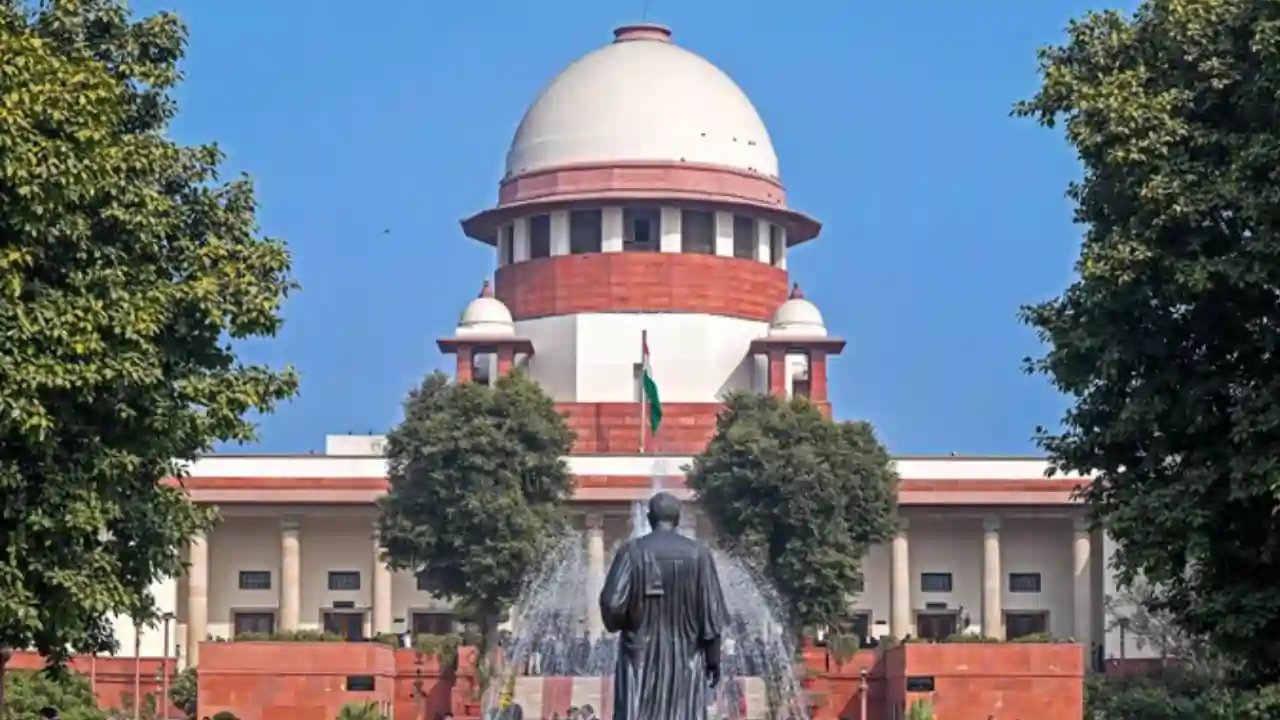
New Delhi: In a significant development for India’s anti-corruption framework, the Supreme Court of India on January 13, 2026, pronounced a split verdict on the constitutional validity of Section 17A of the Prevention of Corruption Act, 1988 (PC Act). This provision, inserted via the Prevention of Corruption (Amendment) Act, 2018, requires prior approval from a competent authority before any enquiry, inquiry, or investigation can be launched against a public servant for alleged offences related to decisions or recommendations made in the discharge of official duties.
The case, titled Centre for Public Interest Litigation v. Union of India (W.P.(C) No. 1373 of 2018), was heard by a two-judge bench comprising Justice B.V. Nagarathna and Justice K.V. Viswanathan. Due to the sharply divergent opinions, the matter has been referred to the Chief Justice of India, Justice Surya Kant, for the constitution of an appropriate larger bench to deliver a binding decision.
Background of Section 17A and the Challenge
Section 17A was introduced to safeguard honest public servants from frivolous or motivated complaints that could hinder decision-making and cause policy paralysis. The government argued that the provision prevents vexatious litigation, allows public officials to perform duties fearlessly, and maintains administrative efficiency. The section applies where the alleged corruption offence relates to any recommendation or decision taken in official functions, with the competent authority being the Central or State Government (depending on the public servant’s employment) or the authority empowered to remove them from office.
A key provision clarifies that no approval is needed for on-the-spot arrests involving acceptance or attempted acceptance of undue advantage. The authority must decide on the approval within three months, extendable by one month with recorded reasons.
The Centre for Public Interest Litigation (CPIL), represented by advocate Prashant Bhushan, challenged the provision as unconstitutional, claiming it shields corrupt officials, undermines accountability, and revives protections previously struck down by the Supreme Court. The petition relied on landmark rulings like Vineet Narain v. Union of India (which emphasized independence in investigations) and Subramanian Swamy v. Union of India (which invalidated Section 6A of the Delhi Special Police Establishment Act for creating impermissible classification favoring senior bureaucrats).
CPIL argued that Section 17A creates a similar barrier, foreclosing even preliminary enquiries and subordinating anti-corruption probes to executive discretion, potentially leading to conflicts of interest.
Divergent Opinions from the Bench
The bench delivered separate judgments reflecting fundamentally different approaches to balancing administrative protection with anti-corruption enforcement.
Justice B.V. Nagarathna held Section 17A unconstitutional and liable to be struck down entirely. She described the provision as arbitrary, illegal, unequal, and violative of Article 14 (equality before law) of the Constitution. According to her, the classification based on the “nature of duties” lacks rational nexus with the PC Act’s objective, as it disproportionately protects higher-level civil servants involved in decision-making while exposing lower-level officials to immediate scrutiny.
Justice Nagarathna emphasized that the requirement bars even preliminary enquiries at the threshold, preventing discovery of truth and shielding wrongdoing rather than honest officers. She noted that honest public servants with integrity do not need such statutory protection, and the provision contradicts the PC Act’s core purpose of detecting and punishing corruption. She rejected the policy paralysis argument, observing that it may embolden mala fide decisions instead.
Tracing historical context, she viewed Section 17A as an attempt to resurrect struck-down regimes like the Single Directive and Section 6A, which larger benches had invalidated. Frivolous complaints, she argued, can be addressed under existing mechanisms like Section 19 of the PC Act, making prior approval unnecessary. She stressed that the provision assumes police complaints are malicious and subordinates investigations to executive control, undermining rule of law.
In contrast, Justice K.V. Viswanathan upheld Section 17A as constitutionally valid, but with significant safeguards through harmonious interpretation. He cautioned against striking it down, describing it as “throwing the baby out with the bathwater,” as the provision serves as a necessary screening mechanism to protect honest officers from coercive investigations, arrests, and irreversible reputational damage in the age of social media.
Justice Viswanathan highlighted the qualitative difference from struck-down provisions: Section 17A is not a blanket shield but a balanced safeguard against frivolous FIRs leading to “play-it-safe syndrome” and administrative inertia. He stressed the need for a fine balance between preventing mala fide prosecutions and ensuring probity.
To address misuse concerns, he proposed reading down the provision so that approval decisions depend on recommendations from independent bodies like the Lokpal (at the Centre) or Lokayukta (in States). Complaints should first route through these authorities for preliminary scrutiny, fact-finding, and recommendations before government sanction. He noted that Lokpal can inquire even against the Prime Minister, reinforcing accountability. Statutory timelines must be strictly followed, and reasons recorded.
He argued that mere possibility of misuse cannot invalidate legislation, and constitutional validity cannot rest on hypotheticals.
Broader Constitutional and Governance Implications
The split verdict underscores deep tensions in Indian jurisprudence:
- Article 14 — Whether selective protection amounts to hostile discrimination.
- Rule of Law — If prior approval subordinates probes to executive discretion.
- Separation of Powers — Extent of executive influence over criminal investigations.
- Accountability vs. Autonomy — Balancing effective governance with robust anti-corruption enforcement.
Challenges include potential indefinite delays in sanctions, executive interference influenced by political factors, unequal treatment of officials, and erosion of public trust in anti-corruption laws favoring the powerful.
Other Anti-Corruption Mechanisms in India
The PC Act defines corruption as acceptance or solicitation of gratification (beyond legal remuneration) by public servants for official acts, with penalties up to five years imprisonment. The 2018 amendment also criminalized bribery of foreign officials.
Related laws include the Lokpal and Lokayuktas Act, 2013 (for inquiries against high functionaries, including the Prime Minister), Central Vigilance Commission Act, 2003 (promoting transparency), Right to Information Act, 2005 (enhancing access to information), and India’s ratification of the United Nations Convention Against Corruption (UNCAC) in 2011.
Hearing Highlights and Next Steps
The hearing concluded with light moments, including Prashant Bhushan acknowledging judicial depth and Solicitor General Tushar Mehta’s humorous remark on the judgment.
Until a larger bench decides, Section 17A remains in force, but its future hinges on resolving this constitutional dilemma. The ruling could reshape anti-corruption enforcement, administrative decision-making, and public accountability in India, potentially prompting parliamentary reconsideration.
This verdict highlights the ongoing struggle to protect genuine public service while ensuring no one is above the law in the fight against corruption. The larger bench’s decision will be eagerly awaited for clarity on this critical issue.
FAQs
1. What is Section 17A of the Prevention of Corruption Act, and why was it introduced?
Section 17A, inserted through the Prevention of Corruption (Amendment) Act, 2018, mandates that no police officer can conduct any enquiry, inquiry, or investigation into alleged corruption offences by a public servant — where the offence relates to any recommendation made or decision taken in the discharge of official functions or duties — without the prior approval of the competent authority (usually the Central or State Government, or the authority empowered to remove the public servant).
The provision was introduced to protect honest public servants from frivolous, vexatious, or motivated complaints that could lead to harassment, coercive investigations, arrests, and reputational damage (especially amplified by social media). The government argued it prevents policy paralysis, the “play-it-safe syndrome,” and encourages fearless decision-making in public service, while still allowing immediate action in trap cases (red-handed bribe acceptance).
2. Why did the Supreme Court deliver a split verdict on the constitutional validity of Section 17A?
The two-judge bench comprising Justice B.V. Nagarathna and Justice K.V. Viswanathan delivered divergent opinions after hearing a public interest litigation (PIL) filed by the Centre for Public Interest Litigation (CPIL), represented by advocate Prashant Bhushan.
- Justice B.V. Nagarathna held that Section 17A is unconstitutional and should be struck down entirely. She ruled it violates Article 14 (equality before law) by creating arbitrary classification that disproportionately shields higher-level decision-making officials while leaving lower-level ones exposed. She described it as contrary to the PC Act’s core objective of detecting and punishing corruption, as it forecloses even preliminary enquiries at the threshold, shields the corrupt rather than the honest, and resurrects struck-down protections (like the Single Directive and Section 6A of the DSPE Act). She emphasized that honest officers with integrity do not need such protection, and frivolous complaints can be handled under existing mechanisms like Section 19 of the PC Act.
- Justice K.V. Viswanathan upheld Section 17A as constitutionally valid, but with strong safeguards. He cautioned that striking it down would be like “throwing the baby out with the bathwater,” as the provision acts as a necessary screening mechanism to prevent policy paralysis and protect honest officials from motivated probes. He proposed reading it down harmoniously with the Lokpal and Lokayuktas Act, requiring complaints to first route through independent bodies like the Lokpal (Centre) or Lokayukta (States) for preliminary scrutiny, fact-finding, and recommendations before government sanction. He stressed statutory timelines must be followed, reasons recorded, and that mere possibility of misuse cannot invalidate a law.
Due to the split, the matter has been referred to Chief Justice of India Surya Kant for the constitution of a larger bench to deliver a final, authoritative decision.
3. How does this verdict impact ongoing and future corruption investigations against public servants?
Until a larger bench resolves the issue, Section 17A remains in force as the law of the land, meaning prior approval is still required for probes related to official decisions (except trap cases).
The split highlights a deep constitutional dilemma: balancing protection for genuine public servants against the risk of shielding corruption, executive interference, indefinite delays in sanctions, and erosion of public trust. If the larger bench upholds Section 17A (with or without Lokpal safeguards), investigations may continue with added independent oversight. If it strikes it down, probes could become faster and less dependent on government approval, potentially strengthening anti-corruption enforcement but risking more frivolous cases.
4. What are the key constitutional issues at the heart of this case?
The verdict raises critical questions involving:
- Article 14 (Right to Equality): Does the provision create hostile discrimination by insulating higher officials disproportionately?
- Rule of Law: Can investigations be subordinated to executive discretion, potentially allowing conflict of interest?
- Separation of Powers: How much control should the executive have over criminal probes against its own officials?
- Accountability vs. Administrative Autonomy: How to protect honest decision-making without weakening the fight against corruption?
The case also references landmark precedents like Vineet Narain v. Union of India (emphasizing independent investigations) and Subramanian Swamy v. Union of India (striking down Section 6A).
5. What happens next, and how might this affect India’s anti-corruption framework?
The matter is now placed before the Chief Justice of India to constitute an appropriate larger bench (likely 3 or 5 judges) for a binding resolution. This decision could significantly shape future anti-corruption jurisprudence, administrative accountability, and public trust in governance.
It may prompt Parliament to revisit Section 17A — perhaps introducing independent oversight like Lokpal involvement, strict timelines, or clearer guidelines — to align it better with constitutional principles and the PC Act’s anti-corruption goals. Related mechanisms like the Lokpal and Lokayuktas Act, 2013, Central Vigilance Commission, RTI Act, and India’s obligations under the United Nations Convention Against Corruption will continue to play a role in the broader fight against corruption.
This split verdict underscores the ongoing tension between safeguarding honest public service and ensuring no one is above the law in India’s battle against corruption. The larger bench’s ruling will be a landmark moment.