
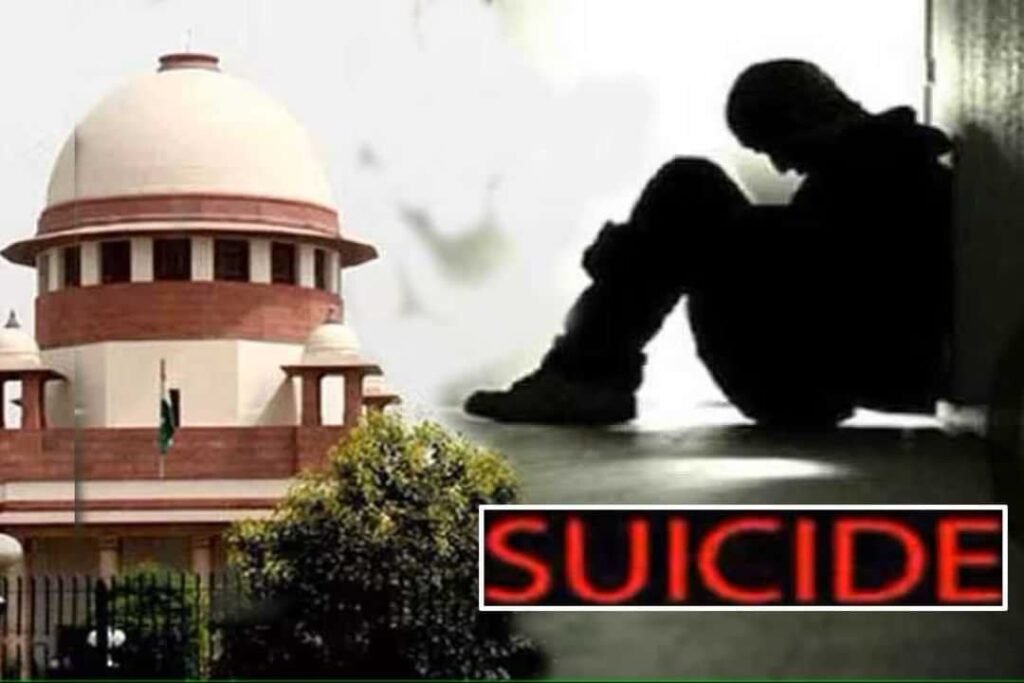
New Delhi: In a strongly worded interim order, the Supreme Court of India has mandated urgent, enforceable reforms across every higher educational institution (HEI) in the country to arrest the alarming rise in student suicides. Delivered on January 15, 2026 by Justices J.B. Pardiwala and R. Mahadevan in the matter of Amit Kumar & Ors. v. Union of India, the judgment invokes the court’s plenary powers under Article 142 of the Constitution, making the directions immediately binding on public and private institutions alike.
The order arrives against the backdrop of an interim report submitted by the National Task Force (NTF) constituted by the Supreme Court itself in March 2025. The NTF, headed by former Supreme Court judge Justice S. Ravindra Bhat, was directed to identify root causes, evaluate existing policy frameworks and recommend concrete preventive steps. The court has now translated many of the NTF’s findings into actionable obligations with strict timelines.
Deep Concern Over an “Epidemic” of Student Distress
The bench described itself as “deeply saddened and disturbed” by the recurring tragedies. It emphasised that reported suicides are only the visible portion of a much larger crisis of student mental health and well-being.
While acknowledging that some contributing factors lie in wider society, the court made it clear that a significant number of stressors originate within the direct control of educational institutions. The judgment rejected the widespread tendency to “individualise” blame—attributing suicides solely to personal weaknesses—and insisted that HEIs must accept institutional responsibility.
“Irrespective of whom the culpability may lie from a strict penal perspective, HEIs cannot shirk away from their fundamental duty to ensure that their institutions as a whole are safe, equitable, inclusive and conducive spaces of learning,” the order stated in unequivocal terms.
Alarming National Data and the Cost of “Massification”
Relying on NTF analysis of national statistics, the court recorded that suicide ranks as either the second leading cause of death (for men) or the leading cause (for women) in the 15–29 age group—far ahead of medical causes. The National Crime Records Bureau reported over 13,000 student suicides in 2022 alone, with India’s rate in this age bracket substantially higher than global averages.
India’s higher education sector has expanded dramatically through mass enrolment and privatisation, placing the country second globally in total student numbers. However, the Supreme Court warned that this rapid quantitative growth—without matching qualitative institutional support—has left students dangerously vulnerable. The judgment described the situation as having reached “epidemic” proportions, especially when viewed alongside the National Education Policy 2020 target of achieving 50% Gross Enrolment Ratio by 2035.
Principal Stressors Identified by the National Task Force
The NTF highlighted a cluster of systemic and institutional factors:
- Chronic vacancies in teaching posts, non-teaching staff and critical leadership positions (Vice-Chancellors, Registrars and others), weakening governance, grievance redressal and accountability.
- Normalisation of caste-based discrimination, ragging, harassment and other abusive practices due to inadequate oversight.
- Financial insecurity caused by prolonged delays in scholarship disbursements, sometimes resulting in exclusion from classes, examinations or hostel facilities.
- Academic pressures including rigid attendance policies, overloaded and poorly sequenced curricula, unfair evaluation methods, heavy dependence on inexperienced guest faculty, opaque or non-existent campus placement processes.
- Particularly exploitative conditions in medical education, where duty hours frequently exceed prescribed limits—sometimes stretching to 36–48 continuous hours.
- Tokenistic or non-functional grievance redressal mechanisms such as Equal Opportunity Cells, Internal Complaints Committees, Anti-Ragging Committees/Squads and Anti-Discrimination Officers.
- Fragmented and poorly enforced regulatory framework spread across UGC regulations, NEP 2020, National Suicide Prevention Strategy and Mental Healthcare Act, 2017, with minimal consequences for non-compliance.
- Absence of accessible mental health services in approximately 65% of institutions.
Binding Directions Issued by the Supreme Court
The court issued the following time-bound and nationwide mandates:
1. Centralised and Transparent Suicide Data
All suicides in the 15–29 age group must be centrally recorded using Sample Registration System data. The NCRB is directed to maintain separate categorisation for school students and higher education students in its annual reports.
2. Mandatory Immediate & Annual Reporting
Every HEI must report any student suicide or unnatural death to the local police without delay—irrespective of whether the incident occurs on campus, in hostels, private accommodations or elsewhere, and regardless of the mode of study. Institutions must also submit an annual consolidated report to the UGC, AICTE, NMC, DCI, BCI or the Department of Higher Education (for central universities and institutes of national importance).
3. 24×7 Emergency Medical Access
All residential HEIs are required to ensure qualified medical help is available round-the-clock, either on campus or within a one-kilometre radius.
4. Urgent Filling of Vacant Posts
All vacant teaching and non-teaching positions—including reserved posts for SC/ST/OBC/EWS and persons with disabilities—must be filled within four months. Special recruitment drives should be organised where necessary. Vice-Chancellors and Registrars must be appointed ideally within one month, and in no case later than four months, of the post falling vacant. HEIs must maintain auditable records of vacancies, reserved quotas and reasons for delay.
5. Elimination of Scholarship-Related Penalties
All pending scholarship dues must be cleared within four months. Future disbursements must follow clear timelines. Any delay must be communicated in writing (with reasons) to students and institutions within two months. No student may be barred from classes, examinations, hostels, or denied marksheets/degrees solely due to administrative delays in scholarship release.
6. Strict Compliance with Existing Safeguard Regulations
HEIs must ensure full and functional implementation of UGC regulations concerning prevention of ragging, promotion of equity, prohibition of sexual harassment and student grievance redressal. All mandated committees and officers must operate actively and in accordance with prescribed procedures.
7. Development of a Unified Well-Being Framework
The NTF has been tasked with drafting model Standard Operating Procedures for institutional well-being audits, faculty sensitisation programs, and structured mental health services. The Task Force is further directed to propose a single, comprehensive document—potentially titled a “Universal Design Framework”, “Suicide Prevention and Postvention Protocol” or “Student Well-Being Protocol”—that integrates existing guidelines on ragging, equity, harassment prevention and other relevant measures.
Enforcement and Accountability
The Union Government and all state governments have been directed to communicate these orders to every HEI across the country without delay and to monitor compliance rigorously. The Supreme Court has signalled that persistent non-adherence will attract serious consequences.
Legal experts view the judgment as a decisive shift from advisory guidelines to enforceable institutional obligations. By addressing chronic vacancies, financial distress, fragmented regulation and apathetic attitudes head-on, the Supreme Court has attempted to transform higher education campuses into genuinely protective and supportive spaces for India’s youth.
The case remains pending, with the National Task Force expected to submit further recommendations. Until then, these interim directions constitute binding law throughout India’s higher education ecosystem.
FAQs
1. Which institutions are covered by the Supreme Court’s directions on preventing student suicides?
All Higher Educational Institutions (HEIs) across India—whether public or private, central or state universities, deemed universities, institutes of national importance, medical/dental/engineering colleges, or any other institution imparting higher education—are legally bound by these directions.
2. What must colleges and universities do immediately if a student dies by suicide?
Every HEI is required to report the incident of student suicide or any unnatural death to the local police authorities immediately upon becoming aware of it. This applies regardless of whether the death occurred on campus, in the hostel, in private accommodation (PG), or anywhere else, and irrespective of whether the student was enrolled in regular, distance, or online mode. Additionally, institutions must submit an annual report of all such incidents to the UGC / AICTE / NMC / DCI / BCI or the Department of Higher Education (as applicable).
3. Can a student be barred from classes, exams or hostel due to delay in scholarship payment?
No. The Supreme Court has explicitly directed that no student shall be penalised—including being debarred from classes, examinations, hostels, or denied marksheets/degrees—solely because of delay in scholarship disbursement caused by administrative lapses. All pending scholarship backlogs must be cleared within four months from the date of the order, and future payments must follow clear timelines.
4. What has the Supreme Court said about vacant teaching and administrative posts?
All vacant teaching and non-teaching positions (including reserved posts for SC/ST/OBC/EWS and persons with disabilities) must be filled within four months. Special recruitment drives may be conducted if required. Critical leadership positions such as Vice-Chancellor and Registrar should ideally be filled within one month of the post falling vacant, and in no case later than four months. Institutions must maintain proper records of vacancies, reserved quotas, and reasons for any delay to ensure accountability.
5. Will there be better mental health support and suicide prevention measures in colleges going forward?
Yes. The court has mandated:
Development of a unified, comprehensive “Student Well-Being Protocol” or similar framework by the National Task Force that will integrate mental health services, faculty sensitisation, institutional audits, suicide prevention and postvention guidelines into one single enforceable document. These steps aim to shift from scattered, poorly enforced rules to a cohesive, accountable system focused on student mental health.
24×7 access to qualified medical help in every residential HEI (either on campus or within 1 km radius)
Strict enforcement of existing anti-ragging, anti-discrimination, POSH and grievance redressal committees