

New Delhi: In an 11th-hour diplomatic breakthrough on April 7, 2026, US President Donald Trump announced a conditional two-week ceasefire with Iran, narrowly averting what he had described as potentially catastrophic strikes on Iranian infrastructure. The deal, finalized just before an 8 p.m. EDT deadline, hinges on Iran suspending hostilities and ensuring the complete, immediate, and safe reopening of the Strait of Hormuz to commercial shipping. This critical waterway, through which roughly one-fifth of global oil passes, had become a flashpoint in the escalating US-Iran conflict.
Trump shared the update via his Truth Social platform at 18:32 Washington time, stating the US and Iran were “very far along” in negotiations toward a “definitive” long-term peace agreement. He credited conversations with Pakistan’s Prime Minister Shehbaz Sharif and Field Marshal Asim Munir for the de-escalation. Iran’s Foreign Minister Seyed Abbas Araghchi confirmed Tehran would halt defensive operations and coordinate safe passage through the strait with its armed forces for the two-week period, while maintaining its claim of “dominion” over the waterway. The announcement triggered immediate market optimism, with US crude oil futures plunging below $100 per barrel and stock futures surging in after-hours trading.
This fragile truce marks a temporary pause in a conflict that had intensified over recent weeks, involving US and Israeli strikes on Iranian targets. It offers Trump a political off-ramp from escalating rhetoric that included threats of wiping out an entire “civilisation,” but questions remain about whether the next two weeks of talks—set to begin in Islamabad on April 10—can yield a permanent settlement. Analysts note that while the deal buys time, deep divisions persist over Iran’s nuclear program, regional influence, and sanctions relief.
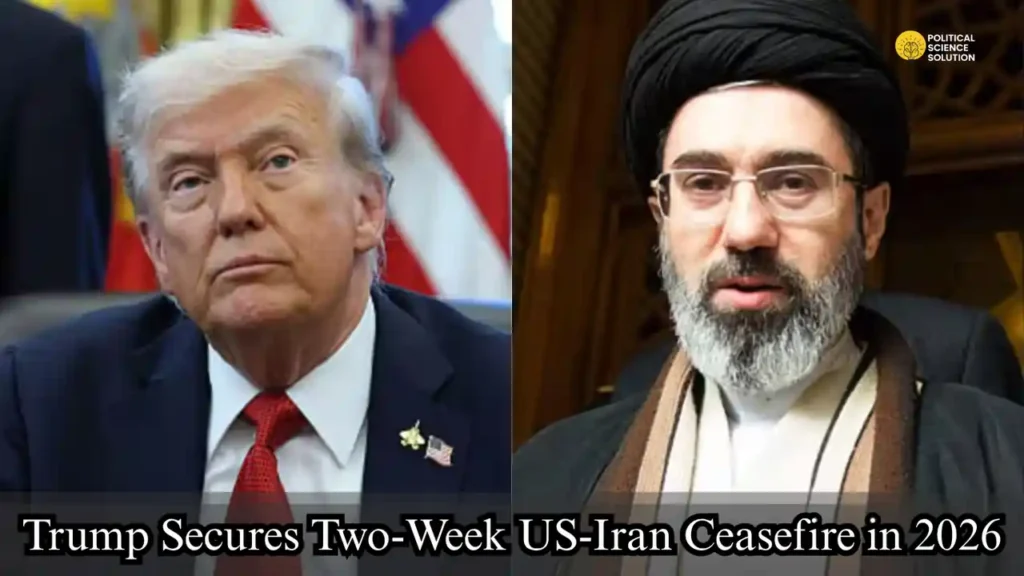
How the Conflict Reached the Brink
Tensions had spiraled dramatically in the days leading up to the deadline. Trump had issued a 48-hour ultimatum on April 4 for Iran to accept terms or face “all Hell,” followed by a jaw-dropping warning on April 7 that a “whole civilisation will die tonight, never to be brought back again” if Tehran refused to reopen the Strait of Hormuz and comply with US demands. These statements drew widespread condemnation, even from within Trump’s own Republican Party, and sparked fears of a broader regional catastrophe involving energy infrastructure and transportation networks.
The US had already conducted strikes degrading Iran’s military capabilities, killing several top leaders, though the regime remained in power. Iran’s enriched uranium stockpile and proxy networks, including the Houthis in Yemen, continued to pose concerns. As the clock ticked toward 8 p.m. EDT, cooler heads—facilitated by backchannel diplomacy—prevailed. Iran agreed to suspend hostilities across multiple fronts, while the US paused planned massive bombardments.
Core Elements of the Ceasefire Agreement
The truce is explicitly conditional and double-sided. Iran must allow controlled, safe passage through the Strait of Hormuz for two weeks, coordinated via its armed forces. In exchange, the US halts offensive operations. Trump emphasized that Washington had “met and exceeded” all military objectives, positioning the pause as a chance to finalize a broader peace deal in the Middle East.
Iran’s leadership framed the agreement around acceptance of its 10-point proposal as a “general framework” for negotiations. Trump described the plan as a “workable basis,” though White House clarifications stressed it serves only as a starting point, not a finalized commitment. The deal also ties into efforts for a “cessation of war across all fronts,” though Israel quickly clarified exclusions.
Iran’s 10-Point Proposal: A Detailed Breakdown
Central to the discussions is Iran’s comprehensive 10-point plan, which Tehran claims the US has accepted in principle for talks. As outlined by Iranian state media and relayed through diplomatic channels, the demands include:
- A formal non-aggression pact between the US and Iran.
- Continued Iranian control over the Strait of Hormuz, with provisions for regulated commercial transit.
- US recognition of Iran’s right to uranium enrichment as part of its nuclear program.
- Lifting of all primary US sanctions directly targeting Iran.
- Removal of all secondary sanctions affecting third-party countries trading with Iran.
- Termination of all United Nations Security Council resolutions imposed on Iran.
- Ending all International Atomic Energy Agency (IAEA) Board of Governors resolutions against Tehran.
- Payment of compensation by the United States for war damages inflicted on Iran.
- Complete withdrawal of US combat forces from the West Asia region.
- A full cessation of hostilities on every front, explicitly including conflicts involving Iran-backed groups such as Hezbollah (referred to as the “Islamic Resistance of Lebanon”) in Lebanon.
These points reflect Tehran’s long-standing positions on sovereignty, economic relief, and regional autonomy. Discrepancies have already emerged, such as varying emphasis on enrichment rights between Farsi and English versions of the document, signaling potential sticking points in upcoming talks.
Pakistan’s Pivotal Role in Brokering the Deal
Pakistan played a decisive behind-the-scenes mediator role, leveraging its unique relationships with both Washington and Tehran. Prime Minister Shehbaz Sharif and Field Marshal Asim Munir—whom Trump has publicly called his “favourite” Field Marshal—facilitated urgent communications in the final hours. Sharif publicly requested an extension of the deadline and Hormuz reopening, while Munir engaged directly with US and Iranian counterparts.
On April 8, Sharif announced the ceasefire and invited delegations to Islamabad for further negotiations starting April 10. Pakistani officials described the atmosphere as “sombre but hopeful,” with a small circle of negotiators working through entrenched positions. This intervention built on Pakistan’s historic ties with Iran, shared border, and defence pact with Saudi Arabia, helping bridge gaps when direct US-Iran talks appeared stalled.
Economic Repercussions: Oil Prices Plunge and Markets Rebound
Global markets reacted swiftly to the de-escalation. Brent crude fell sharply, with US oil futures dropping as much as 18% to around $92.60 in early trading. The prospect of resumed Hormuz traffic eased fears of prolonged shipping disruptions that had driven energy prices higher in recent weeks. Indian trade bodies like FIEO welcomed the move, noting it would alleviate disruptions for global shipping lanes vital to Asian economies.
Trump followed up with an optimistic Truth Social post, declaring it “a big day for World Peace” and promising US assistance with traffic buildup in the strait. He envisioned “lots of positive action,” reconstruction in Iran, and a potential “Golden Age” for the Middle East, with American forces “just ‘hangin’ around’” to ensure smooth operations.
US Political Fallout: Bipartisan Criticism and Support
The ceasefire provided Trump relief amid domestic pressures, including declining poll numbers and economic strains from elevated energy costs. However, his earlier rhetoric triggered sharp rebukes. Democrats, led by figures like Congressman Joaquin Castro and Senate Majority Leader Chuck Schumer, condemned the threats as evidence of unfitness for office and called for accountability. Schumer urged Republicans to join efforts to end the conflict or “own every consequence.”
Even within the GOP, dissent surfaced. Congressman Austin Scott of Georgia labeled the comments “counter-productive.” Senator Ron Johnson warned of a “huge mistake” in proceeding with bombings. Texas Congressman Nathaniel Moran stated the threats were “not who we are” and inconsistent with American principles. Alaska Senator Lisa Murkowski echoed that the rhetoric “cannot be excused away as leverage.”
The White House countered that the tough stance achieved results, degrading Iran’s military while opening diplomatic doors.
Worldwide Reactions: Relief Mixed with Caution
International responses highlighted a mix of optimism and skepticism. Spain’s Foreign Minister Jose Manuel Albares described humanity as having come “perilously close” to disaster, calling Trump’s ultimatum “absolutely unacceptable for humankind.” UAE presidential adviser Anwar Gargash proclaimed his nation “victorious” from a war it sought to avoid, citing enhanced regional influence.
Oman welcomed the truce and urged root-cause solutions for permanent peace. UN Secretary-General António Guterres called for full compliance to protect civilians and pave the way for lasting peace, with his envoy Jean Arnault supporting regional efforts. China’s Foreign Ministry pressed for swift normalization of Hormuz passage and joint facilitation by all parties.
India issued an urgent advisory on April 8 for its nationals in Iran to “expeditiously exit” the country, coordinating with the embassy in Tehran and avoiding land borders without clearance. Blasts were reported in Bahrain’s capital Manama, with authorities attributing a fire to “Iranian aggression” and activating alarms for safe spaces.
Israel’s Position and Lingering Regional Tensions
Israeli Prime Minister Benjamin Netanyahu supported the US-Iran pause but explicitly excluded Lebanon from the truce. His office reaffirmed ongoing operations against Hezbollah, underscoring that the deal does not halt Israel’s separate campaign. A strike in Sidon shortly after the announcement killed at least eight, illustrating the truce’s limited scope. Pro-government rallies in Tehran featured flag-burnings and chants against “compromisers,” with Iranian military leaders warning their “hands remain upon the trigger.”
Looking Ahead: Fragile Path to Permanent Peace
Negotiations in Islamabad on April 10 will test whether the 10-point framework can bridge gaps on sanctions, troop withdrawals, compensation, and nuclear rights. Trump has portrayed the moment as an opening for broader Middle East stability, while Iran cautions the war is not over and any violations will provoke response.
The long-term costs—diplomatic, economic, and to global perceptions of US leadership—remain unclear. A nation once seen as a pillar of stability now faces scrutiny for norm-shattering threats. Yet for millions affected by the conflict, this reprieve offers cautious hope. As oil markets stabilize and shipping resumes, the world watches whether two weeks of dialogue can transform a fragile ceasefire into enduring peace. The coming days in Islamabad will determine if this off-ramp leads to a true exit from war or merely a pause before renewed escalation.
FAQs
1. What is the US-Iran ceasefire agreement about?
The US and Iran agreed to a two-week ceasefire on April 7, 2026, just before Trump’s 8 PM deadline. Iran will reopen the Strait of Hormuz to commercial shipping while the US halts planned strikes on Iranian infrastructure. Negotiations for a permanent deal will begin in Islamabad on April 10.
2. What are Iran’s 10-point demands in the ceasefire deal?
Iran’s 10-point plan includes a non-aggression pact, recognition of uranium enrichment rights, lifting of all US sanctions, compensation for war damages, US troop withdrawal from the region, and continued Iranian control over the Strait of Hormuz.
3. What role did Pakistan play in the US-Iran ceasefire?
Pakistan acted as the main mediator. Prime Minister Shehbaz Sharif and Field Marshal Asim Munir facilitated last-minute talks between Washington and Tehran, helping secure the two-week truce and arranging the upcoming Islamabad summit.
4. How have oil prices and global markets reacted to the ceasefire?
Oil prices dropped sharply after the announcement. US crude fell below $100 per barrel, with Brent crude also declining significantly. Markets welcomed the reopening of the Strait of Hormuz, easing fears of prolonged energy disruptions.
5. Does the US-Iran ceasefire include Israel and Hezbollah?
No. Israel has clarified that the ceasefire does not cover its operations in Lebanon against Hezbollah. While the US-Iran truce pauses direct strikes, fighting in Lebanon continues, limiting the scope of the agreement.