

New Delhi: The integration of women into the Indian Armed Forces represents one of the most profound shifts in India’s national security framework, symbolizing Nari Shakti (women’s power) in safeguarding the nation. As the world observed International Women’s Day on March 8, the spotlight turned to the remarkable progress women have made in leadership, operational, and combat-oriented roles across the Indian Army, Indian Navy, and Indian Air Force. This transformation underscores India’s dedication to gender equality in defense while bolstering overall military effectiveness.
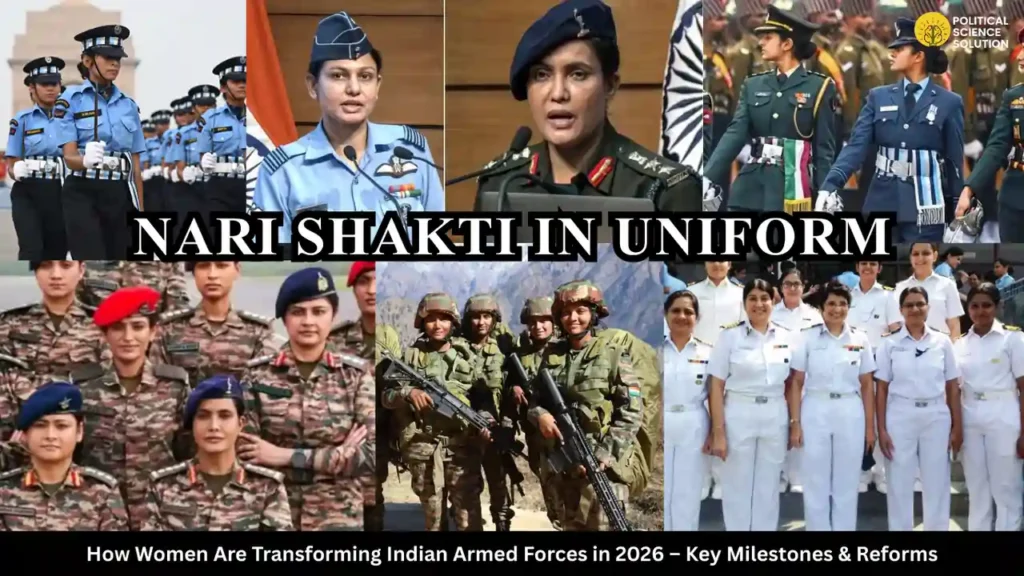
Historical Evolution: From Support Roles to Frontline Contributions
The participation of women in India’s defense services traces back to the post-independence era. In 1958, women doctors received Regular Commissions in the Army Medical Corps on equal terms with men, marking an early step toward inclusion. A pivotal change arrived in 1992 when officer-level entry opened for women through schemes like the Women Special Entry Scheme (WSES) in the Army, allowing service in non-combat branches and extending opportunities to widows of fallen personnel as a compassionate gesture. Similar advancements unfolded in the Navy and Air Force during the same period.
Over the decades, policy evolution has accelerated. The Kargil Review Committee in 1999 advocated broadening women’s involvement in logistics, engineering, and intelligence. A landmark Supreme Court judgment in 2020 mandated the Permanent Commission for women officers in the Army, paving the way for sustained careers, promotions, and command positions. The Agnipath Scheme launched in 2022 further enabled women to join as Agniveers in all three services. Judicial directives also facilitated women’s entry into the National Defence Academy (NDA) starting in 2022, with the inaugural batches graduating in 2025.
Today, these reforms have produced tangible results. The combined number of women officers across the services surged from roughly 3,000 in 2014 to over 11,000 by early 2026—a nearly fourfold increase driven by expanded recruitment, training, and institutional commitment to inclusivity.
Current Representation and Operational Impact
Women now constitute varying percentages across the branches: approximately 4–5% of officers in the Army, 6–7% in the Navy, and the highest at 13–14% in the Air Force. This growth expands the talent pool, infuses diversity into decision-making, and enhances operational diversity.
Studies, including those from the United Nations, demonstrate that gender-diverse teams improve problem-solving, communication, and overall performance in security operations. In peacekeeping contexts, women personnel excel at community engagement, particularly with women and children in conflict zones. India pioneered the deployment of the first all-women police unit to Liberia in 2007 under UN auspices, building local trust. Currently, more than 154 Indian women serve in six UN peacekeeping missions, achieving about 22% representation in staff officer and observer roles—nearing the UN Gender Parity Strategy target of 25%.
Pioneering Milestones and Trailblazing Officers
Numerous women have shattered barriers and set benchmarks. In the Army, Lt Gen Sadhna S. Nair became the first woman to hold the position of Director General Medical Services (Army), exemplifying ascent to the highest echelons of medical leadership in the force.
Captain Hansja Sharma achieved a groundbreaking feat by qualifying as the first woman pilot to operate the Rudra combat helicopter, the armed variant of the Advanced Light Helicopter. Her accomplishment highlights women’s entry into high-stakes aviation combat support roles.
The Indian Air Force has seen several firsts in fighter aviation. Squadron Leader Bhawana Kanth became the first woman fighter pilot cleared for combat missions during daytime operations. Squadron Leaders Avani Chaturvedi and Shivangi Singh also reached key milestones, including piloting advanced platforms like the Rafale.
In the Navy, women officers contribute to maritime security and exploration. Lieutenant Commander Annu Prakash played roles in critical operations, while Sub Lieutenant Aastha Poonia entered the fighter stream of Naval Aviation. Lieutenant Commanders Dilna K and Roopa A completed a landmark global circumnavigation aboard INSV Tarini, demonstrating endurance and leadership at sea.
Additional notables include Colonel Ponung Doming, who commanded the world’s highest Border Task Force in the northern sector, and Wing Commander Anjali Singh, the first woman military diplomat posted abroad. Officers like Sophia Qureshi and Vyomika Singh gained prominence during operations, serving as national inspirations.
On the global stage, Indian women peacekeepers have earned accolades. Major Swathi Shanthakumar received the UN Secretary-General’s Gender Award (2025) in the Gender Category for her efforts under the “Equal Partners, Lasting Peace” initiative in South Sudan. Radhika Sen was honored as the Military Gender Advocate of the Year 2023 by the United Nations for advancing gender-responsive peacekeeping and community initiatives.
Key Policy Reforms Driving Change
Government initiatives have systematically dismantled barriers:
- Permanent Commission extended to women in 12 Arms and Services of the Army.
- Admission of women to the NDA from 2022, with institutionalized intake—including six vacancies per course for the Air Force (two each in Flying, Ground Duty Tech, and Non-Tech) up to 2027. As of early 2026, 158 women cadets have joined, with Haryana leading (35 cadets), followed by Uttar Pradesh (28) and Rajasthan (13).
- 10% reservation for girls in Sainik Schools starting 2021-22.
- Induction of women into fighter pilot and combat streams in the Air Force, with the 2015 experimental scheme regularized permanently in 2022.
- Recruitment of women Agniveers in the Air Force and Navy via the Agnipath Scheme.
- The Military Nursing Service continues as the sole all-women corps.
These measures reflect alignment with constitutional principles under Article 15, prohibiting sex-based discrimination, and mirror global trends in countries like the UK, France, Australia, Germany, Japan, South Korea, and Turkey, where women have access to diverse military careers.
Remaining Challenges and Path Ahead
Despite advancements, hurdles persist. Full integration into core combat arms remains gradual compared to nations like Israel, Germany, France, and Australia. Infrastructure in remote or field postings often lacks gender-sensitive facilities, impacting deployment. Past short-service commission policies limited long-term command prospects, though reforms address this. Cultural and social attitudes within ranks occasionally slow acceptance.
To sustain momentum, experts emphasize expanding command and leadership avenues, upgrading support infrastructure, bolstering mentorship and training, and aligning policies with equality imperatives.
Conclusion: A Stronger, More Inclusive Defense Future
The rising prominence of women in India’s Armed Forces—from medical pioneers in 1958 to today’s fighter pilots, helicopter commanders, and senior leaders—embodies institutional evolution and societal progress. With over 11,000 women officers contributing across domains, their roles strengthen combat readiness, enrich strategic perspectives, and project India’s commitment to inclusive defense. As Nari Shakti continues to rise, the future promises even greater participation, ensuring a more robust and equitable safeguard for the nation.
FAQs
1. How many women officers are there in the Indian Armed Forces in 2026?
As of early 2026, the total number of women officers across the Indian Army, Navy, and Air Force has crossed 11,000. This marks a significant rise from around 3,000 women officers in 2014 — almost a fourfold increase in just over a decade. The growth is driven by expanded recruitment, Permanent Commission policies, entry into NDA, Agnipath Scheme, and opening of combat and flying roles.
2. What are some major historic firsts achieved by women in the Indian Armed Forces recently?
Several groundbreaking milestones have been recorded:
• Capt. Hansja Sharma — First woman pilot to qualify on the Rudra armed combat helicopter (Army).
• Sqn Ldr Bhawana Kanth — First woman fighter pilot cleared for daytime combat missions (IAF).
• Sqn Ldr Avani Chaturvedi and Sqn Ldr Shivangi Singh — Among the early women to fly frontline fighters including the Rafale.
• Lt Gen Sadhna S. Nair — First woman to become Director General Medical Services (Army).
• Sub Lt Aastha Poonia — Entered the fighter stream of Naval Aviation.
• Lt Cdr Dilna K & Lt Cdr Roopa A — Completed historic global circumnavigation on INSV Tarini.
• Col Ponung Doming — Commanded the world’s highest Border Task Force in the northern sector.
• Wing Cdr Anjali Singh — First woman military diplomat posted abroad.
3. What key policy changes have increased opportunities for women in the Indian military?
Major reforms include:
• Permanent Commission granted to women officers in 12 Arms and Services of the Indian Army (following the 2020 Supreme Court judgment).
• Women admitted to the National Defence Academy (NDA) from 2022; first batches graduated in 2025.
• 10% reservation for girls in Sainik Schools starting from the 2021-22 academic year.
• Permanent induction of women into fighter pilot and other combat aviation streams in the Indian Air Force (experimental scheme of 2015 made permanent in 2022).
• Recruitment of women Agniveers in the Air Force and Navy under the Agnipath Scheme (Army also inducts women Agniveers).
These steps, along with earlier openings in 1992 and recommendations of the 1999 Kargil Review Committee, have steadily expanded roles beyond medical and nursing services.
4. How are women from the Indian Armed Forces contributing to United Nations peacekeeping missions?
Indian women peacekeepers have earned global recognition:
• India has achieved approximately 22% women representation in staff officer/observer roles in UN missions (close to the UN Gender Parity Strategy target of 25%).
• The first all-women police unit was deployed by India to Liberia in 2007, significantly improving community trust.
• Major Swathi Shanthakumar received the UN Secretary-General’s Gender Award (2025) for her work on the “Equal Partners, Lasting Peace” initiative in South Sudan.
• Radhika Sen was named Military Gender Advocate of the Year 2023 by the United Nations for advancing gender-responsive peacekeeping and community engagement. Women officers often excel in communication with local women and children in conflict zones, enhancing mission effectiveness.
5. What challenges do women still face in the Indian Armed Forces and what is the way forward?
Despite impressive progress, some challenges remain:
- Limited induction into core combat arms (infantry, armoured corps, artillery, etc.) compared to countries like Israel, Germany, France, and Australia.
- Infrastructure gaps — lack of adequate gender-sensitive facilities in remote/field postings.
- Historical short-service commission policies previously restricted long-term command opportunities (largely addressed now through Permanent Commission).
- Occasional cultural and social resistance within ranks.
The way forward includes:
Further expanding command and leadership roles.
Upgrading infrastructure and support systems in field areas.
Strengthening training, mentorship, and sensitization programmes.
Continuing policy alignment with Article 15 of the Constitution (prohibition of discrimination on grounds of sex).