

New Delhi: U.S. President Donald Trump has officially launched the Board of Peace, a new international body chaired by himself, as a central component of his Comprehensive Plan to End the Gaza Conflict, commonly referred to as the 20-point Gaza peace proposal. The announcement marks the transition into Phase Two of the plan, which focuses on establishing transitional governance, full demilitarization, reconstruction, and long-term stability in the Gaza Strip following a fragile ceasefire that took effect in October 2025.
The Board of Peace, described by President Trump as “the Greatest and Most Prestigious Board ever assembled at any time, any place,” was formally announced via a post on his Truth Social platform on January 15, 2026. This development follows the recent establishment of a 15-member Palestinian technocratic committee, known as the National Committee for the Administration of Gaza (NCAG), tasked with handling day-to-day governance in post-war Gaza. The NCAG operates under the direct supervision of the Board of Peace, aligning with the framework endorsed by United Nations Security Council Resolution 2803 (2025).
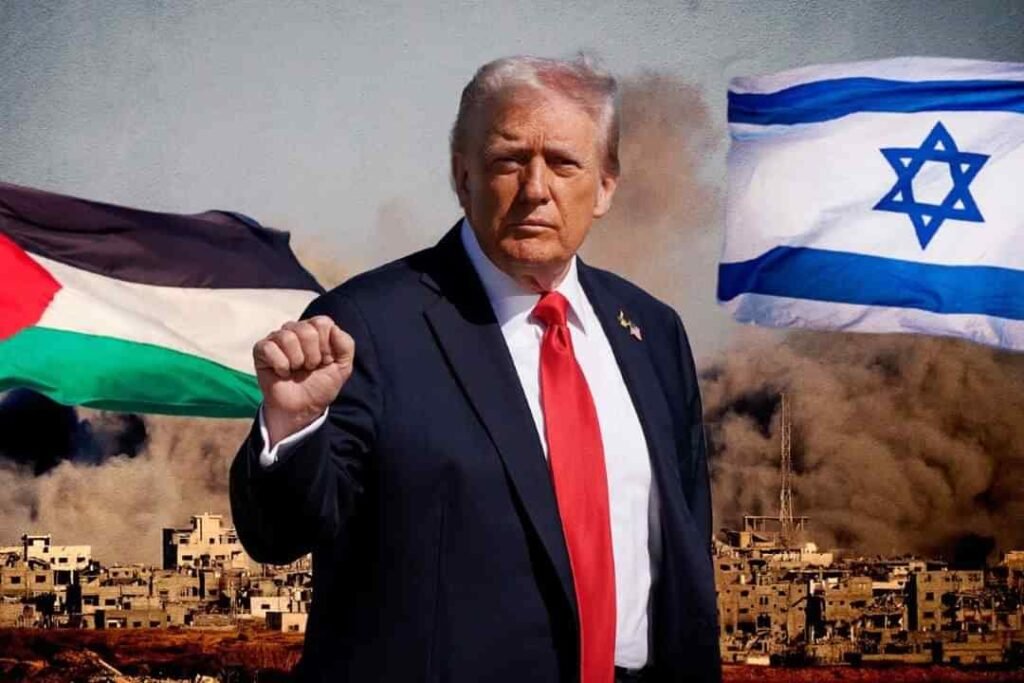
Origins and Mandate of the Board of Peace
The Board of Peace emerges as a proposed international organization and transitional governing administration specifically designed to implement the U.S.-backed 20-point plan. Its core mandate includes overseeing the operations of the NCAG and the forthcoming International Stabilization Force (ISF), mobilizing global resources for reconstruction, and enforcing accountability during Gaza’s shift from conflict toward sustainable peace and development.
President Trump is set to serve as the permanent chair of the Board of Peace, potentially for life according to draft charter details circulating among invited nations. The structure features an Executive Board comprising prominent world leaders and influential global figures. Initial appointees include U.S. Secretary of State Marco Rubio, Trump’s special envoy Steve Witkoff, former British Prime Minister Tony Blair, and Trump’s son-in-law Jared Kushner. Additional members are expected to be named in the coming weeks, with announcements anticipated during Trump’s upcoming visit to the World Economic Forum in Davos.
The board’s on-the-ground representative in Gaza is slated to be Nickolay Mladenov, the former UN Middle East envoy and Bulgarian politician. A separate 11-member Gaza Executive Board has also been established to provide direct support to the technocratic administration, incorporating officials from countries such as Turkey and Qatar.
Membership Structure and Controversial Funding Model
Invitations to join the Board of Peace have been extended to approximately 60 nations, including India, Argentina, Canada, Egypt, Turkey, Hungary, Vietnam, Australia, France, Germany, Italy, and others. Countries can participate with three-year terms at no financial cost, but permanent membership requires a reported contribution of $1 billion, intended to fund Gaza’s rebuilding efforts. The White House has framed this as a demonstration of “deep commitment to peace, security, and prosperity.”
Hungary, under Prime Minister Viktor Orban—a longtime Trump ally—has unequivocally accepted the invitation. Canada’s Prime Minister Mark Carney has agreed in principle, with details under negotiation. Italian Prime Minister Giorgia Meloni indicated readiness to contribute, though specifics remain unclear. Other responses have been more reserved, with many governments expressing private concerns over the initiative’s implications.
Phase Two of the 20-Point Gaza Peace Plan
The broader 20-point plan, which secured UN endorsement through Resolution 2803 in 2025, facilitated Phase One milestones including a ceasefire on October 10, 2025, the return of hostages held by Hamas, a partial Israeli military withdrawal, prisoner exchanges, and a significant surge in humanitarian aid.
Phase Two, announced by U.S. envoy Steve Witkoff, advances toward full demilitarization—including the disarmament of Hamas and other Palestinian armed groups—technocratic governance via the NCAG, and large-scale reconstruction. The International Stabilization Force (ISF) is being deployed to secure the territory and train vetted Palestinian police units.
Regional mediators Egypt, Qatar, and Turkey have welcomed the Palestinian Technocratic Committee, headed by Ali Shaath, a former deputy planning minister in the Palestinian Authority (PA). They view it as a step toward consolidating stability and addressing the dire humanitarian crisis. Both Hamas (in coordination with Palestinian Islamic Jihad) and the PA have expressed conditional support, emphasizing the need for a unified Palestinian governance structure and the principle of “one system, one law, and one legitimate weapon.”
Persistent Challenges and Fragile Ceasefire
Despite progress, significant hurdles remain. The ceasefire has proven tenuous, with Gaza’s Hamas-run Health Ministry reporting over 451 Palestinian deaths from Israeli strikes since October 2025. The Israeli military has reported soldier casualties in Palestinian attacks during the same period. Key unresolved issues include Israel’s full military withdrawal from Gaza—no detailed timetable has been provided—and Hamas’s refusal to commit to complete disarmament without guarantees of an independent Palestinian state.
The recovery of the remains of Ran Gvili, the last deceased Israeli hostage, has become a flashpoint. Israeli Prime Minister Benjamin Netanyahu has prioritized this matter, delaying the reopening of the Rafah border crossing until compliance. The Hostages and Missing Families Forum has insisted that no advancement to Phase Two can occur without resolution.
Humanitarian conditions in Gaza remain catastrophic, with the United Nations highlighting the urgent need for unrestricted aid flows. Children have only recently returned to school after years of disruption.
Global Reactions and Concerns Over UN Role
The Board of Peace’s broader ambitions have sparked caution and criticism. Draft charter language describes it as a “nimble and effective international peace-building body” capable of addressing conflicts worldwide beyond Gaza, raising fears that it could undermine the United Nations. Diplomats have dubbed it a potential “Trump United Nations,” pointing to Trump’s lifelong chairmanship and the paid permanent membership model.
Russia and China abstained from Resolution 2803, criticizing the lack of a clear UN role in Gaza’s future. UN officials, including Secretary-General Antonio Guterres’ spokesperson, have emphasized that member states may form associations freely while the UN continues its mandated work. Former German Foreign Minister Annalena Baerbock, now UN General Assembly president, warned against eroding the UN’s universal framework.
Some observers have labeled the structure neocolonial, noting the absence of Palestinian representatives on the main board and the involvement of figures like Kushner and Blair amid historical sensitivities. Israel’s government has objected to the board’s composition—particularly inclusions from Turkey and Qatar—stating it was not coordinated and contradicts Israeli policy.
A New Approach to Global Conflict Resolution?
President Trump has positioned the Board of Peace as a shift from traditional universal multilateralism toward minilateral, leader-centric institutions. In interviews, he indicated it could expand to other resolved or emerging conflicts, reflecting his pursuit of pragmatic, common-sense solutions over what he views as failed legacy approaches.
As invitations continue and a potential signing ceremony looms in Davos, the initiative’s success hinges on securing broad participation, enforcing compliance from all parties, and delivering tangible improvements in Gaza. With over 71,430 reported deaths in Gaza since the October 2023 escalation and ongoing violations, the path to durable peace remains fraught with uncertainty.
This development represents one of the most ambitious U.S.-led efforts in recent Middle East diplomacy, blending transitional administration, international oversight, and innovative funding mechanisms in a bid to reshape conflict resolution paradigms.
FAQs
1. What is the Board of Peace and what is its main purpose?
The Board of Peace is a newly established international organization and transitional governing body chaired by U.S. President Donald Trump. It serves as a core element of his Comprehensive Plan to End the Gaza Conflict (the 20-point peace proposal), which was endorsed by UN Security Council Resolution 2803 in 2025. Its primary mandate focuses on overseeing the National Committee for the Administration of Gaza (NCAG)—a 15-member Palestinian technocratic committee handling daily governance—and the International Stabilization Force (ISF). The board mobilizes global resources for reconstruction, ensures accountability, supervises demilitarization (including disarmament of unauthorized groups like Hamas), and supports Gaza’s transition from conflict to long-term peace, stability, and development. While initially centered on Gaza following the October 2025 ceasefire, draft charter language suggests potential expansion to other global conflicts.
2. Who leads the Board of Peace and who are some of its members?
President Donald Trump chairs the Board of Peace, with indications from invitation documents that he may serve in this role indefinitely or for life. The founding Executive Board includes high-profile figures such as U.S. Secretary of State Marco Rubio, special envoy Steve Witkoff, former British Prime Minister Tony Blair, and Jared Kushner (Trump’s son-in-law). Nickolay Mladenov, a former UN Middle East envoy, is designated as the board’s on-the-ground representative in Gaza. A separate 11-member Gaza Executive Board supports the technocratic administration and includes officials from countries like Turkey and Qatar. Additional members from invited nations are expected to be announced soon, potentially during Trump’s attendance at the World Economic Forum in Davos.
3. How does one join the Board of Peace, and what is the controversial membership model?
Invitations have been sent to around 60 countries, including India, Argentina, Canada, Egypt, Turkey, Hungary, Vietnam, France, Germany, Italy, Australia, Israel, Russia, and others. Countries can join for renewable three-year terms with no financial contribution required. However, permanent membership is available for a reported $1 billion contribution per country, with funds intended to support Gaza’s reconstruction and the board’s operations. Hungary and Vietnam have publicly accepted invitations, while others like Canada have agreed in principle pending details. Responses from most nations remain cautious or private, with some expressing concerns about the model’s implications. Israel has reportedly received an invitation but coordination issues persist regarding certain inclusions.
4. How does the Board of Peace fit into the overall 20-point Gaza peace plan and its phases?
The 20-point plan, announced by Trump and endorsed by the UN in late 2025, facilitated Phase One: a ceasefire effective October 10, 2025, hostage returns, partial Israeli withdrawals, prisoner exchanges, and increased humanitarian aid. Phase Two, now underway, establishes the NCAG for technocratic governance, deploys the ISF to train Palestinian police and secure the area, advances full demilitarization (including Hamas disarmament), and launches large-scale reconstruction. The Board of Peace supervises these efforts, ensuring compliance and resource coordination. Challenges include the fragile ceasefire—with reported violations and over 450 Palestinian deaths since October per Gaza’s health ministry—unresolved issues like Israel’s complete withdrawal timetable, Hamas’s reluctance to fully disarm without statehood guarantees, and delays over recovering the remains of the last Israeli hostage, Ran Gvili.
5. Why has the Board of Peace sparked controversy and concerns from the international community?
Critics, including diplomats and UN officials, worry that the board—often described as leader-centric and minilateral—could undermine the United Nations by creating a U.S.-dominated parallel structure with Trump as lifelong chair and a pay-for-permanent-seat model. Russia and China abstained from Resolution 2803, citing insufficient UN involvement in Gaza’s future. Some European governments and analysts have called it a potential “Trump United Nations” or even neocolonial, pointing to the lack of Palestinian representatives on the main board, involvement of figures like Kushner and Blair (amid historical sensitivities), and broad charter language allowing expansion beyond Gaza. Israel has objected to certain proposed members (e.g., from Turkey and Qatar), while humanitarian groups highlight ongoing dire conditions in Gaza and the need for unrestricted aid. Supporters argue it offers a pragmatic, nimble alternative to failed multilateral approaches.