

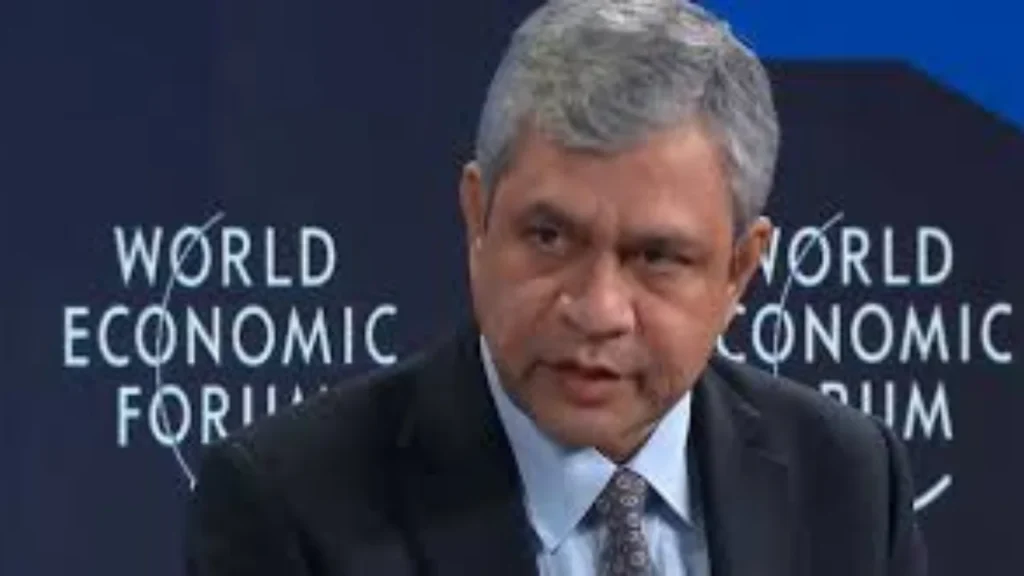
New Delhi: India is making bold strides to establish itself as a sovereign powerhouse in artificial intelligence and advanced semiconductor manufacturing. Union Minister for Electronics & Information Technology, Railways, and Information & Broadcasting, Shri Ashwini Vaishnaw, laid out the country’s comprehensive strategy during key interactions at the World Economic Forum Annual Meeting 2026 in Davos. The announcements come ahead of the highly anticipated India AI Impact Summit (February 19–20, 2026, New Delhi), which is expected to attract global technology leaders, investors, and policymakers.
AI Impact Summit: Prioritizing Outcomes, Accessibility, and Safety
The forthcoming India AI Impact Summit has been deliberately designed with a results-driven agenda rather than conventional panel discussions. Shri Vaishnaw outlined three central objectives:
- Demonstrating real-world impact – showing how AI models, applications, and infrastructure can dramatically improve efficiency, multiply productivity, and deliver measurable economic benefits.
- Ensuring accessibility for the Global South – building on India’s proven success with UPI and Digital Public Infrastructure (DPI), the summit will showcase whether a similarly scalable, low-cost AI stack can be created for developing economies.
- Embedding safety by design – addressing public concerns through Indian-developed guardrails, technical safeguards, regulatory frameworks, bias-mitigation tools, reliable deepfake detection, and model-unlearning mechanisms that can withstand judicial scrutiny.
The summit will feature high-level participation from global CEOs, technology executives, and heads of state, alongside major investment announcements and the official launch of India’s indigenous AI model family.
Surge in Deep-Tech Startups and Chip Design Momentum
India now hosts nearly 200,000 startups, securing its place among the world’s top three startup ecosystems. Over the past decade, there has been a clear pivot toward deep technologies. Particularly impressive is the semiconductor design segment: 24 Indian startups are actively developing chips—one of the most capital-intensive and technically demanding areas—and 18 of them have already secured venture capital funding. This reflects strong global investor confidence in India’s deep-tech capabilities.
Strategic Semiconductor Roadmap: From 28nm Mastery to 3nm Leadership
Shri Vaishnaw presented a pragmatic, phased approach to semiconductor self-reliance. He noted that roughly 75% of global chip volume falls in the mature 28nm–90nm node range, which powers electric vehicles, automobiles, railways, defense electronics, telecom infrastructure, and a large portion of consumer devices.
India’s immediate focus is to achieve world-class manufacturing proficiency in this high-volume segment before progressing to cutting-edge nodes. In close collaboration with partners including IBM, the country has defined a clear timeline:
- 7-nanometer technology by 2030
- 3-nanometer technology by 2032
Four high-tech indigenous chip fabrication units are scheduled to commence production this year itself. The minister emphasized that India is simultaneously building the full semiconductor value chain—design, fabrication, packaging, materials, specialty gases, and equipment—positioning the nation as an increasingly reliable global supply-chain partner.
Key Bilateral Engagements Strengthen Global Ties
During Davos, Shri Vaishnaw held productive meetings with senior technology leaders:
- Google Cloud CEO Thomas Kurian – discussions centered on Google’s deepening commitment, including a planned $15 billion AI data center in Visakhapatnam (Vizag), Andhra Pradesh, and expanded partnerships with Indian startups.
- Meta Chief Global Affairs Officer Joel Kaplan – the conversation focused on protecting users from deepfakes and AI-generated misinformation, with Meta sharing details of its ongoing content-safety initiatives.
Five-Layer AI Ecosystem: India Working Across the Entire Stack
The minister described the modern AI ecosystem as comprising five interdependent layers:
- Application & Usage Layer – highest return-on-investment potential; Indian IT services companies are rapidly embedding AI into enterprise workflows and public-service delivery (AI hiring up ~33%).
- Models Layer – focus on efficiency with ~12 specialized, sovereign small-to-medium models (most workloads handled by models ≤50 billion parameters).
- Semiconductor / Chip Layer – indigenous custom silicon development to reduce external dependency.
- Infrastructure Layer – ~$70 billion in confirmed AI data-center and compute investments already under execution.
- Energy Layer – supported by reforms such as the Shakti Act, which opens nuclear energy to private-sector participation.
Real-world examples already in deployment include Kisan e-Mitra (AI chatbot for farmers) and Bhashini (multilingual AI translation covering 20+ Indian languages).
Democratizing AI: Subsidized GPUs at One-Third Global Cost
A flagship initiative announced at WEF involves government-subsidized GPU access priced at approximately one-third of prevailing global rates. Through a public-private partnership, India has created a shared national compute facility with 38,000 GPUs, accessible to students, researchers, startups, and innovators—countering the concentration of compute resources in the hands of a few large technology companies.
Additional democratizing measures include:
- Free AI models tailored for common societal use cases
- Skilling 10 million citizens in AI-related competencies
- Steering the IT industry toward scalable, exportable AI services
Sovereign AI Models: Efficiency, Affordability, and Strategic Autonomy
Rather than pursuing trillion-parameter behemoths, India is developing a bouquet of focused, efficient models optimized to run on modest GPU clusters while serving very large populations at low cost. Sovereign capability ensures resilience against potential geopolitical restrictions on foreign AI resources. Several models have already undergone extensive real-world validation across multiple domains, with the complete series expected to roll out soon.
Government as Demand Generator and Sectoral Focus
The Indian government is actively creating demand in areas where commercial models are not yet mature—particularly weather forecasting, precision agriculture, and healthcare. Special emphasis is being placed on predictive and preventive healthcare, where India aims to emerge as a global leader.
Large-scale funding, sovereign model integration, and nationwide infrastructure will accelerate AI diffusion and strengthen the domestic talent pipeline.
Long-Term Vision: Multi-Decade AI Revolution
Shri Vaishnaw described the AI transformation as a decades-long journey still in its early chapters. He contrasted the human brain’s operation on just a few watts with the hundreds of megawatts consumed by modern AI data centers, highlighting enormous future potential for efficiency breakthroughs—many already being pursued by Indian deep-tech startups.
The minister called on industry to collaborate on designing AI-ready academic curricula, preparing the next generation in a manner similar to earlier successes in 5G and semiconductors.
With sovereign models, subsidized compute infrastructure, aggressive semiconductor timelines, and an inclusive, safety-first approach, India is not merely participating in the global AI race—it is positioning itself to help define the rules, tools, and equitable pathways forward.
FAQs
1. What is the India AI Impact Summit 2026, and when and where will it take place?
The India AI Impact Summit 2026 is a landmark global event hosted by the Government of India under the IndiaAI Mission (led by the Ministry of Electronics and Information Technology – MeitY). It focuses on demonstrating tangible, real-world impact of AI, ensuring accessibility especially for the Global South, and embedding strong safety frameworks. Unlike previous global AI summits that emphasized safety or action, this one prioritizes measurable outcomes, inclusive adoption, ethical innovation, and sectoral applications in areas like healthcare, agriculture, education, and climate.
The main summit is scheduled for February 19–20, 2026, at Bharat Mandapam, Pragati Maidan, New Delhi. Related events include the India AI Impact Expo (February 16–20, 2026) showcasing practical AI solutions, a Research Symposium, and global impact challenges like AI for ALL, AI by HER, and YUVAI. It is expected to feature heads of state, tech CEOs, investors, and the launch of India’s indigenous AI models, with potential investment announcements exceeding $70–100 billion in AI infrastructure.
2. What are India’s sovereign AI models, and why is the country focusing on them?
India is developing a portfolio of approximately 12 focused, sovereign AI models (with plans to showcase 6–7 at the summit) instead of chasing ultra-large foundational models. These are efficient, smaller-to-medium-sized models (most workloads handled by ≤50 billion parameters) designed to run on modest GPU clusters, deliver low-cost services to massive populations, and support India’s diverse languages, cultures, and use cases (e.g., agriculture via Kisan e-Mitra chatbot or multilingual translation via Bhashini in 20+ languages).
Sovereign models ensure strategic autonomy and resilience — protecting against potential restrictions on foreign AI resources due to geopolitical factors. They prioritize efficiency, affordability, and national control while covering ~95% of typical AI workloads. Several models have already been rigorously tested in real-world scenarios, with full rollout expected soon. This approach aligns with India’s vision of democratizing AI and reducing external dependency across the five-layer ecosystem (applications, models, chips, infrastructure, and energy).
3. How is India democratizing AI access, particularly through compute resources?
To overcome GPU scarcity and concentration in big tech hands, India is providing government-subsidized GPU access at roughly one-third of global costs via a public-private partnership shared national compute facility with 38,000 GPUs. This resource is available to students, researchers, startups, and innovators — making high-performance compute inclusive rather than exclusive.
Additional steps include free AI models for common societal needs, skilling 10 million people in AI competencies, and pivoting the IT services industry toward scalable AI solutions for India and global markets. The government is also acting as a demand generator by funding applications in underserved sectors like weather forecasting, precision agriculture, and predictive/preventive healthcare.
4. What is India’s semiconductor roadmap, and when will advanced chip production begin?
India is pursuing a staged, pragmatic strategy to build self-reliance in semiconductors. About 75% of global chip volume lies in the mature 28nm–90nm range (used in EVs, automobiles, railways, defense, telecom, and consumer electronics), so the country is mastering this segment first.
Key timelines include:
- Indigenous high-tech chip production starting in four units this year (2026).
- Achieving 7nm technology by 2030.
- Reaching 3nm technology by 2032.
In partnership with global players like IBM, India is building the full ecosystem — design, fabrication, packaging, materials, gases, and equipment. With a massive talent pool, complete design capabilities, expanding manufacturing, and a booming electronics market, the minister expects India to rank among the top 4–5 semiconductor nations globally. This reduces dependency and positions India as a trusted supply-chain partner.
5. How is India addressing AI safety, regulation, and the full AI ecosystem?
Safety is a core pillar of the upcoming summit and India’s strategy. The country advocates a techno-legal approach — combining robust technical tools (bias mitigation, accurate deepfake detection, model unlearning that meets judicial standards) with appropriate guidelines and guardrails developed indigenously.
India is advancing across the five-layer AI stack:
- Applications — highest ROI; rapid integration into enterprise and public services (AI hiring in IT up ~33%).
- Models — sovereign and efficient.
- Chips — custom indigenous silicon.
- Infrastructure — ~$70 billion in confirmed investments (data centers, compute).
- Energy — supported by reforms like the Shakti Act opening nuclear energy to private participation for sustainable power.
The vision treats AI as a multi-decade revolution, with India leading in inclusive, efficient, and safe deployment for economic and social good.