

New Delhi: In a stark assessment delivered to the Lok Sabha, the Parliamentary Standing Committee on External Affairs has characterized the current state of India-Bangladesh relations as the most formidable strategic test for New Delhi since India’s decisive role in Bangladesh’s 1971 independence struggle. The committee’s report, titled “Future of India-Bangladesh Relationship,” warns that the abrupt fall of Sheikh Hasina’s administration in August 2024 has ushered in an era of profound political flux, raising fears of a lasting shift in Dhaka’s geopolitical alignment.
Chaired by Congress MP Shashi Tharoor, the panel compiled its findings after extensive consultations with senior diplomats, intelligence officials, and experts over several months. Foreign Secretary Vikram Misri provided detailed briefings in sessions spanning late 2024 through mid-2025. The document, submitted on December 18, 2025, lays out a comprehensive diagnosis of bilateral strains while outlining urgent steps to safeguard India’s interests.
India-Bangladesh Ties at Crossroads
Mounting Political and Security Concerns
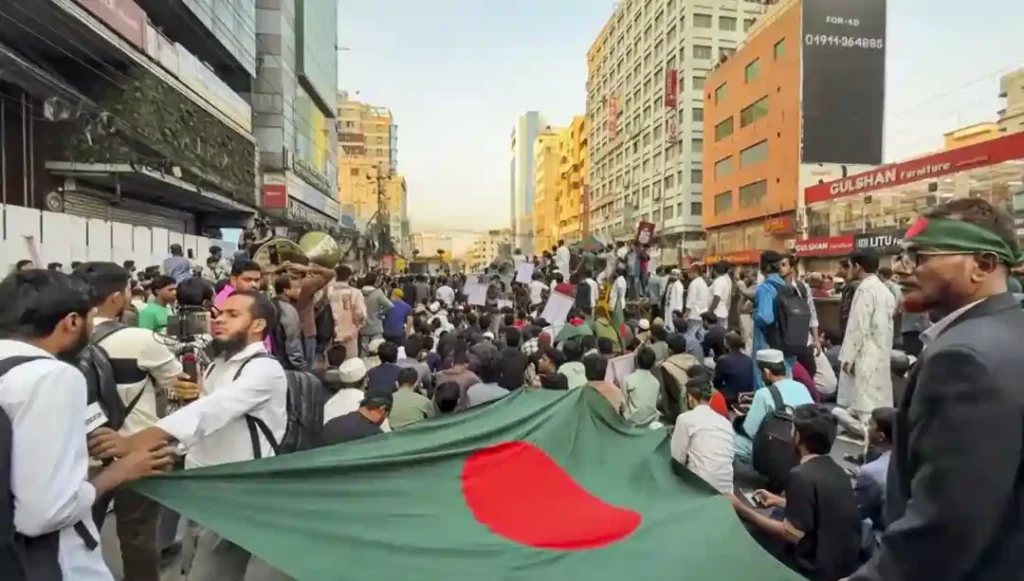
The collapse of the Awami League government has created a vacuum that, according to the report, enables fringe elements to push aggressive rhetoric against India. This includes accusations of interference in Bangladesh’s internal affairs and threats to isolate India’s northeastern states. The committee highlighted recent street demonstrations in Dhaka and Rajshahi targeting Indian diplomatic missions, which prompted temporary closures of visa centers and diplomatic protests from both sides.
Security along the 4,096-kilometer shared border remains a core worry. With 864 kilometers still lacking physical fencing—much of it in treacherous riverine and hilly areas—the panel pointed to persistent risks of illegal crossings, smuggling, and militant activities. The report calls for accelerated deployment of cutting-edge surveillance tools, including unmanned aerial vehicles, seismic sensors, and automated intrusion alerts.
Migration issues add another layer of complexity. The committee proposed establishing a dedicated bilateral task force to oversee identity checks and voluntary returns of undocumented individuals. It emphasized the importance of adhering to legal protections and avoiding mistaken deportations of Indian citizens.
Economic Ties Under Pressure Amid Trade Disparities
Bilateral commerce reached $13.46 billion in the fiscal year 2024-25, but the imbalance is pronounced: Indian exports stood at $11.45 billion, while Bangladesh’s shipments to India totaled only $2 billion. The report flags structural hurdles, such as overcrowded border crossings and the diversion of Chinese-origin goods through Bangladesh’s duty-free access to Indian markets.
To address these imbalances, the committee urged swift progress toward a Comprehensive Economic Partnership Agreement (CEPA) featuring stringent rules to prevent origin fraud. It also recommended reviewing India’s generous lines of credit—totaling nearly $10 billion for infrastructure projects—to ensure efficient implementation, especially after disruptions caused by the 2024 political turmoil.
Visa restrictions imposed since August 2024 have slashed daily issuances from pre-crisis levels to roughly 1,250–1,500, mostly for medical and student travel. The panel suggested a phased resumption of regular services while maintaining security protocols, warning that prolonged limits could cede ground to competitors like China in healthcare and education sectors.
Water Disputes and Environmental Vulnerabilities
Shared river systems present one of the most intractable challenges. The Ganga Water Treaty, signed in 1996, is set to lapse in December 2026, yet formal renewal talks have not begun. Negotiations on the Teesta River and 52 other transboundary waterways remain stalled.
The report stresses the need for science-based discussions incorporating the latest hydrological data and climate projections. It also advocates joint initiatives to protect the Sundarbans delta, which faces accelerated erosion and salinity intrusion due to sea-level rise.
China’s Growing Footprint and Regional Implications
The committee expressed deep unease over Beijing’s expanding role in Bangladesh. Key projects include a $370 million enhancement of Mongla Port, potential naval facilities near Pekua, and infrastructure work around Lalmonirhat airfield, situated just 15 kilometers from the Indian border.
These developments heighten concerns about the Siliguri Corridor, India’s narrow land link to its northeastern states. The report urges India to bolster its own connectivity projects and secure transit rights to counterbalance Chinese advances. It also cautioned that Bangladesh’s possible entry into broader regional trade frameworks involving China could undermine existing duty-free privileges.
Diplomatic Pathways and Long-Term Recommendations
The 33-point action plan emphasizes sustained engagement through both official and informal channels to promote democratic stability in Bangladesh. The committee advocated for Track II dialogues and support for credible elections.
To combat misinformation, it proposed creating a specialized unit within the Ministry of External Affairs to monitor and respond to hostile narratives in Bangladeshi media and online spaces. The panel also recommended strengthening cultural and educational exchanges, reviving people-to-people ties, and leveraging BIMSTEC as a more viable regional platform than the stalled SAARC.
On the sensitive issue of Sheikh Hasina’s presence in India, the report reiterated New Delhi’s humanitarian stance while noting that the former leader has not been granted any official platform for political activities.
A Call for Strategic Recalibration
Experts who testified described the situation as a “generational shift” with the potential to erode India’s longstanding influence in Dhaka. The committee stressed that while India respects Bangladesh’s sovereignty and avoids meddling in its domestic affairs, it must adopt a more proactive posture to protect core security and economic interests.
The report arrives amid ongoing diplomatic exchanges, including reciprocal summons of envoys and discussions on security cooperation. As Bangladesh navigates its transitional phase under interim leadership, the coming months will be critical for determining whether bilateral relations can be steered toward renewed trust and cooperation or risk further deterioration.
The parliamentary assessment serves as a clear roadmap for policymakers, underscoring that inaction could lead to lasting consequences in one of India’s most strategically vital neighbors. With the Ganga treaty deadline looming and external powers expanding their presence, the urgency of coordinated action has never been greater.
FAQs
1. What does the Parliamentary Standing Committee describe as India’s greatest strategic challenge in Bangladesh?
The committee has termed the current situation in Bangladesh—following the August 2024 collapse of Sheikh Hasina’s government—as India’s most serious strategic challenge since the 1971 Liberation War. It highlights a generational political shift, rising uncertainty, and the risk of Dhaka realigning its foreign policy away from New Delhi.
2. Why have India-Bangladesh relations deteriorated recently? n Bangladesh?
Key factors include heightened anti-India rhetoric and extremist narratives in parts of Bangladeshi media and society, recent protests targeting Indian diplomatic missions (such as the December 17, 2025 march in Dhaka), concerns over attacks on religious minorities, unresolved water-sharing issues, illegal migration, cross-border security threats, and China’s expanding infrastructure and defence presence in Bangladesh.
3. What are the major concerns regarding water sharing between India and Bangladesh?
The 1996 Ganga Water Treaty is set to expire in December 2026, with no formal renewal discussions started yet. Agreements on 53 other shared rivers, including the long-pending Teesta River sharing arrangement, remain unresolved. Climate change impacts on the Sundarbans delta further complicate joint environmental management.
4. How has bilateral trade and economic cooperation been affected?
Trade reached $13.46 billion in 2024-25, heavily skewed in India’s favour ($11.45 billion exports vs $2 billion imports from Bangladesh). Challenges include trade imbalances, infrastructure bottlenecks at border points, and third-country goods (especially Chinese products) entering India via preferential routes. Visa issuances have also dropped sharply since August 2024 due to security concerns, affecting medical and educational travel.
5. What key recommendations has the parliamentary panel made to improve ties?
The report offers 33 recommendations, including accelerated border fencing with advanced technology, negotiations for a Comprehensive Economic Partnership Agreement (CEPA) with strict origin rules, proactive renewal of the Ganga treaty, creation of a dedicated MEA unit to counter anti-India narratives, sustained diplomatic engagement through multiple tracks, stronger people-to-people contacts, and greater use of regional forums like BIMSTEC instead of the stalled SAARC.