

New Delhi: The student agitation over alleged irregularities in Jharkhand’s recruitment examinations has entered its eleventh consecutive day, with Chief Minister Hemant Soren issuing his first public comments on the matter while the protests continue to draw participants from across the state. Speaking in Ramgarh on Tuesday during the first death anniversary of his father, Shibu Soren, the chief minister declared that the government stands with the youth and that justice will be delivered. His remarks came as aspirants maintained their presence at Jaipal Singh Munda Stadium in Ranchi, hunger strikes continued, and political and organizational support for the movement expanded.
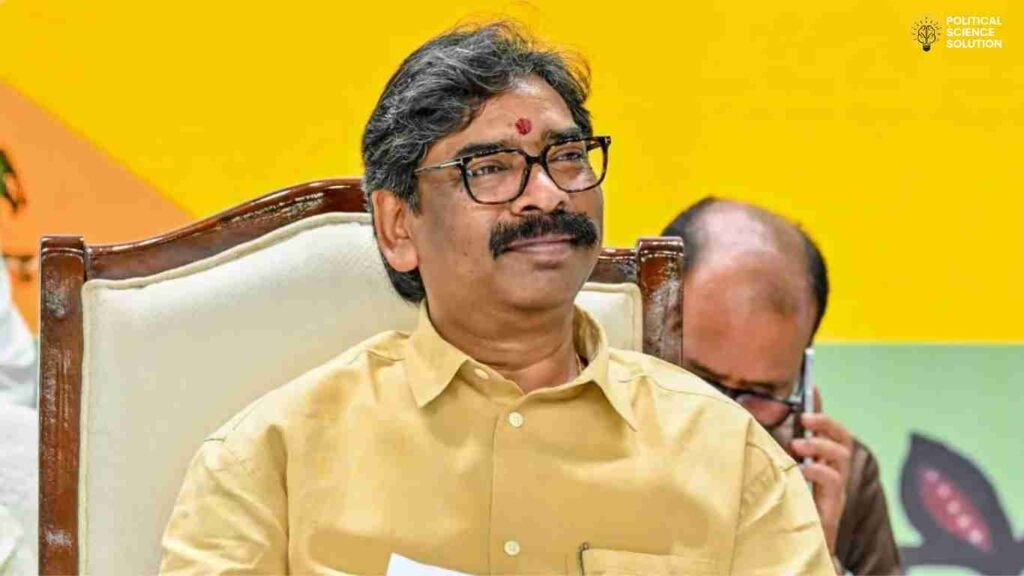
Chief Minister’s First Response and Government Position
Hemant Soren addressed reporters in Ramgarh and stated that the state government remains fully aligned with the concerns of the students. He said that whatever steps are required for the youth, within the framework of the Constitution and the law, the government will take them, and the aspirants will receive justice. The chief minister described the administration as sensitive to the issue and emphasized that it is being examined with the utmost seriousness. In a notable remark, he observed that he could not literally tear open his chest to demonstrate the government’s commitment, yet that commitment is genuine. He added that when the government takes up any matter, its objective is to resolve it properly before considering the issue closed.
Soren also spoke about the status of the ongoing investigation. He noted that the probe agency has been working day and night. The government is waiting for the agency’s report, its findings, and the final outcome. Once those results are available, he said, both the students and the people of the state will be informed of the developments. In related comments, the chief minister reiterated that the government has eyes and ears and is closely following the situation. These statements marked the first direct public reaction from the chief minister since the protest began gathering momentum.
Protest Intensifies at Jaipal Singh Munda Stadium with Hunger Strikes and Growing Support
While the chief minister spoke in Ramgarh, the agitation in Ranchi showed no signs of easing. Students and aspirants from different districts continued to join the gathering at Jaipal Singh Munda Stadium, where the protest has been underway for eleven days. The presence has expanded steadily, with participants maintaining their vigil despite difficult weather conditions that have included heavy rainfall and lightning. Protesters have described their continuous presence as an effort to keep the issue alive until accountability is ensured, with some stating they are staying awake to awaken the government’s conscience.
A central element of the protest has been the indefinite hunger strike by Jharkhand Loktantrik Krantikari Morcha leader Devendra Nath Mahato, who has remained on the fast for several days. Five students have also continued their own hunger strike at the stadium. On the day that coincided with the death anniversary of Dishom Guru, the protesters organized tribute activities and a march, presenting the occasion as both a mark of respect and a reaffirmation of their determination.
Support for the movement has come from multiple organizations. Cockroach Janata Party founder Abhijit Dipke addressed the students through a video call and publicly affirmed that his organization stands with the aspirants in Jharkhand. Dipke and party spokesperson Ashutosh Ranka both conveyed solidarity and endorsed the demands related to irregularities in the JPSC and JSSC examinations. All India Students’ Association leader Neha Bora is scheduled to reach Ranchi to join a planned march to the Jharkhand Assembly on August 7. These expressions of support have added visibility to the agitation and linked it to broader student networks.
Origins of the Controversy, CID Investigation, and Core Demands
The current protest originated after the declaration of results for the preliminary examination of the 14th Jharkhand Public Service Commission Combined Civil Services Examination, which was held on April 19. Aspirants alleged several irregularities. They pointed to the commission’s failure to release category-wise cut-off marks and the publication of a merit list that lacked the signatures of the JPSC’s constitutional members. The situation intensified when an alleged OMR sheet of a candidate circulated on social media. Students claimed that the candidate had been declared qualified despite securing marks lower than the expected cut-off, raising serious questions about the evaluation process.
In response, the Jharkhand government directed the Criminal Investigation Department to investigate the matter. The probe has produced several developments. Former JPSC chairperson L Khiangte resigned from the post. CID teams conducted raids in Ranchi, Palamu, and Hazaribagh, resulting in multiple arrests. Officials have confirmed that eleven people have been taken into custody in connection with the case so far. The investigation continues, with the government stating it is awaiting the full findings.
The students have put forward a clear set of demands. They are seeking a fair probe, the involvement of a central agency such as the Central Bureau of Investigation, and action against those responsible for the irregularities. Many have also called for the cancellation of the 14th JPSC Combined Preliminary Test and an independent investigation that could include the Enforcement Directorate. Concerns have been raised about alleged irregularities in Jharkhand Staff Selection Commission examinations as well, expanding the scope of the agitation.
Political Reactions, High-Level Committee, and the Path Forward
Political voices from different sides have responded to the developments. Bharatiya Janata Party Member of Parliament Nishikant Dubey has called for a CBI probe, alleging corruption and nepotism in the recruitment commissions. Within the ruling side, leader Manoj Pandey stated that strict action would be taken against anyone involved—whether an individual, official, or employee—and assured that those responsible would not be spared.
In a separate step, Chief Minister Soren directed the constitution of a high-level committee headed by Higher and Technical Education Minister Sudivya Kumar. The committee is tasked with interacting with the students and submitting its report within one to three months. This measure runs alongside the CID investigation and forms part of the government’s stated effort to address the concerns.
Beyond the specific examination issues, participants have connected their protest to wider questions of employment opportunity. While Jharkhand’s overall unemployment rate stands at 3.2 percent, below the national average, the urban unemployment figure is higher at 8.1 percent. Protesters have made clear that they are not satisfied with alternative livelihood suggestions such as poultry farming and are seeking permanent government jobs obtained through transparent processes.
As the agitation moves past its eleventh day, attention centers on the progress of the CID probe, the work of the high-level committee, the planned August 7 march to the Assembly, and any further statements from the state government. For the thousands of aspirants who have prepared for years for these competitive examinations, the outcome carries implications that extend beyond individual results. It touches questions of trust in public institutions and the integrity of recruitment systems that determine access to government service. The students at Jaipal Singh Munda Stadium have indicated that their presence will continue until concrete steps address their demands for transparency, independent investigation, and accountability.
FAQs
1. What did Chief Minister Hemant Soren say about the ongoing JPSC student protest?
On Tuesday, while in Ramgarh for the first death anniversary of his father Shibu Soren, Hemant Soren stated that the government stands with the youth and that they will get justice within the framework of the Constitution and the law. He said the administration is sensitive to the issue, is viewing it with utmost seriousness, and is waiting for the investigation agency’s report before informing students and the public of the outcome.
2. Why did the student protest over the 14th JPSC examination begin?
The agitation started after the declaration of preliminary results of the 14th JPSC Combined Civil Services Examination. Aspirants alleged irregularities such as the non-release of category-wise cut-off marks, publication of a merit list without signatures of the commission’s constitutional members, and the circulation of an alleged OMR sheet showing a candidate qualified despite marks below the expected cut-off.
3. How many people have been arrested so far in the JPSC irregularities case?
The Criminal Investigation Department has arrested 11 people so far. Raids were conducted in Ranchi, Palamu and Hazaribagh. Former JPSC chairperson L Khiangte has also resigned from his post.
4. What are the main demands of the protesting students in Ranchi?
Students are demanding a fair probe, involvement of the CBI (and in some cases the Enforcement Directorate), cancellation of the 14th JPSC Combined Preliminary Test, and strict action against those responsible for the alleged irregularities in both JPSC and JSSC examinations.
5. Who has extended support to the student agitation and what further action is planned?
Cockroach Janata Party founder Abhijit Dipke has extended support through a video call. All India Students’ Association leader Neha Bora is scheduled to join a march to the Jharkhand Assembly on August 7. BJP MP Nishikant Dubey has demanded a CBI probe, while the state government has formed a high-level committee headed by Higher and Technical Education Minister Sudivya Kumar to interact with students and submit a report within one to three months.