
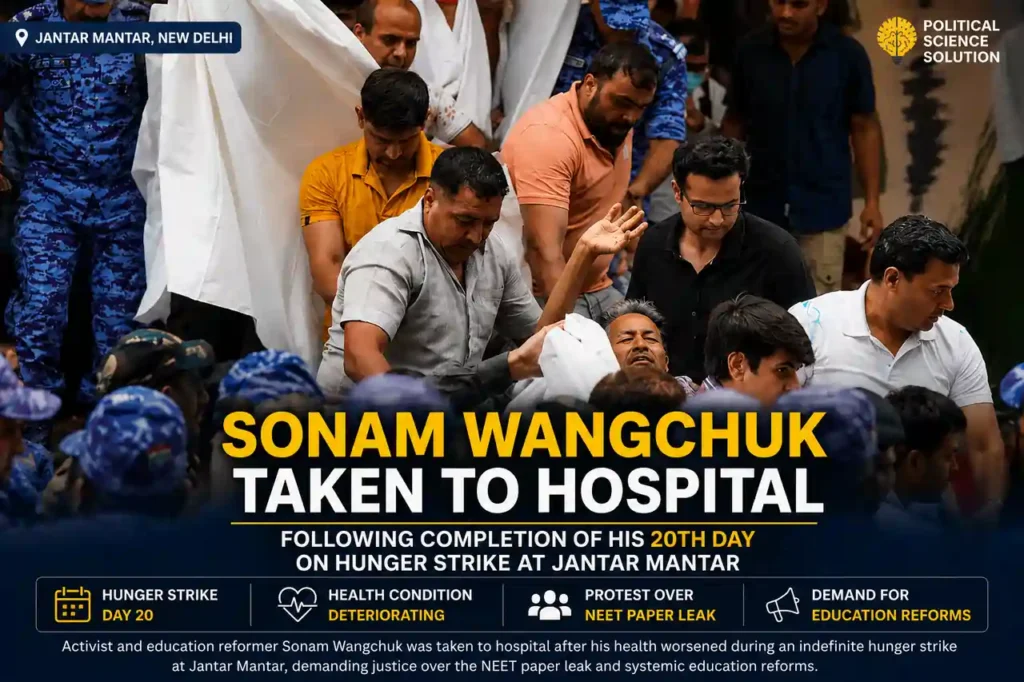
New Delhi, July 18, 2026 – A major development unfolded today at Jantar Mantar when Delhi Police detained climate activist and prominent education reformer Sonam Wangchuk and subsequently asked other participants in the ongoing demonstration to clear the area. The activist, already weakened by weeks of fasting, was shifted to a hospital for medical attention, intensifying discussions around protest protocols, health safeguards, and demands for reforms in India’s education sector.
This intervention marks a pivotal moment in the Cockroach Janta Party (CJP) agitation, which has been active since mid-June. Wangchuk aligned himself with the cause on June 28, bringing national attention to issues ranging from examination scandals to the need for stronger protections in regions like Ladakh. His removal has left many supporters questioning the approach taken by authorities toward a largely peaceful gathering.
Activist’s Emotional Appeal and Update on Health
In a video statement released near the completion of his 20th day on hunger strike, Wangchuk provided a candid update on his physical state. He disclosed losing close to 20 percent of his body weight, outlining the progressive effects—starting with muscle depletion, moving toward risks for vital organs, and potentially impacting brain function if unresolved. Despite these challenges, he affirmed his mental clarity and resolve, stating he remained fully committed and “still alive.”
Wangchuk used the platform to draw powerful parallels with India’s history of citizen-led movements. He referenced past instances where governments fell due to public anger over rising onion prices—in 1980 at the national level, in Delhi in 1998, and in Rajasthan around the same time. He urged people to reflect on priorities: “Do the people of India value their children’s lives and education more than onions?” This comparison aimed to underscore the gravity of student-related crises, including reports of over 20 suicides tied to exam pressures this year, with potential for more without swift action.
He made a pointed call for the Union Education Minister to take responsibility and resign, framing it as essential for rebuilding trust. Wangchuk also appealed for strong turnout at the proposed “Chalo Sansad” march toward Parliament on July 20. “March with me,” he said, describing supporters as the real power behind the movement. He emphasized, “Your numbers are our strength,” noting that collective participation had toppled administrations in the past and could drive accountability now. He humbly positioned himself as one individual reliant on the collective will of the people.
Protest Focus and Broader Context
The CJP demonstration at Jantar Mantar seeks multiple outcomes: resignation of the Education Minister over alleged NEET-UG irregularities, a judicial inquiry into wider exam scams, and systemic changes to safeguard students. Wangchuk’s presence elevated these concerns, connecting them to his lifelong work on sustainable development and education tailored for challenging environments.
Captured moments from the site show him engaging with CJP founder Abhijeet Dipke and others, highlighting collaborative planning. The protest site has served as a focal point for young voices demanding transparency in competitive examinations that shape countless futures.
Wangchuk’s activism extends beyond the current fast. Known for groundbreaking initiatives like artificial glaciers (ice stupas) to combat water scarcity in Ladakh and for establishing innovative learning models through SECMOL, he consistently advocates for ecological balance and culturally relevant education. His efforts also tie into calls for enhanced autonomy and safeguards for Ladakh following its administrative reorganization.
Police Action and Immediate Aftermath
Following Wangchuk’s detention and transfer to hospital care, Delhi Police issued instructions for protesters to vacate Jantar Mantar. The step appears motivated by concerns over public order and the activist’s deteriorating condition. Earlier, Wangchuk had warned that any forcible removal would violate constitutional rights, adding weight to debates on the limits of demonstration spaces.
The development has sparked mixed responses. While some view the authorities’ move as necessary for safety, others see it as an attempt to dampen a growing movement. As medical teams attend to Wangchuk, focus is shifting toward the upcoming July 20 march and how the agitation will adapt.
Significance for National Discourse
This episode brings together several pressing themes: the mental health impact of flawed examination systems, the role of sustained non-violent protest, and the intersection of local environmental challenges with nationwide policy demands. Wangchuk’s messages highlight how ordinary citizens, when united, can influence governance, much like in previous commodity-price agitations.
As India navigates complex issues around youth aspirations, climate resilience in sensitive border areas, and democratic participation, events at Jantar Mantar serve as a microcosm of larger societal conversations. The planned parliamentary march could prove decisive in determining whether these voices translate into tangible policy shifts.
Looking ahead, stakeholders across civil society, government, and the public will monitor Wangchuk’s recovery and the movement’s next steps. His ability to connect personal sacrifice with collective goals continues to resonate, reinforcing the idea that meaningful change requires persistent, unified effort. The coming days promise further clarity on how authorities and activists navigate this delicate balance.
In the end, the Jantar Mantar events of July 18 underscore a fundamental truth: when citizens raise their voices for accountability—whether for students facing exam woes or communities seeking sustainable futures—those voices demand careful attention in a vibrant democracy.
FAQs
1. What prompted Sonam Wangchuk’s removal from the protest site?
Authorities acted primarily due to serious health risks from his extended hunger strike. After nearly 20 days, medical concerns about substantial weight loss and potential organ impact led to his detention and hospitalization by Delhi Police.
2. What are the main goals of the Cockroach Janta Party protest Wangchuk joined?
The movement demands the Union Education Minister’s resignation over examination irregularities (including NEET-UG), a judicial investigation into scams, and wider reforms to make the education system safer and fairer for students. It also ties into broader calls for accountability.
3. What did Wangchuk say in his recent video message about his health and the movement?
He confirmed losing around 20% of his body weight but stressed mental resolve. He compared the protest to past successes over onion prices and called for massive participation in the July 20 Parliament march, emphasizing public numbers as the real strength.
4. What is the significance of the planned July 20 “Chalo Sansad” march?
Wangchuk positioned it as a major show of collective power. He urged supporters to join in large numbers to demonstrate commitment to student issues and press for policy changes through visible public participation.
5. How does this connect to Wangchuk’s wider work in Ladakh?
His activism links education reform with climate action and regional rights. Through projects like ice stupas and innovative schools, he addresses water scarcity, sustainability, and culturally sensitive learning—issues that parallel national demands for equitable development and environmental protection.