

New Delhi: In a significant move amid ongoing conflict with Russia, Ukrainian President Volodymyr Zelenskyy has nominated and secured parliamentary approval for Serhii Koretskyi, the head of the state-owned energy giant Naftogaz, as the country’s new Prime Minister. This appointment, confirmed on July 16, 2026, marks the third change in the premiership since Russia’s full-scale invasion in 2022 and underscores the urgent need to bolster Ukraine’s energy infrastructure ahead of what officials warn could be one of the most challenging winters yet.
The decision comes after Zelenskyy pushed out incumbent Prime Minister Yulia Svyrydenko, who had held the position for just one year. Parliament formally accepted her resignation earlier in the week, paving the way for a swift vote on her successor. Zelenskyy offered limited public explanation for the reshuffle, framing it primarily as an effort to “refresh the leadership” and prioritize preparations for the upcoming winter season. Speaking to reporters in Kyiv, the President described Koretskyi as “the best candidate” for the role, citing his proven track record in managing critical energy assets during wartime.
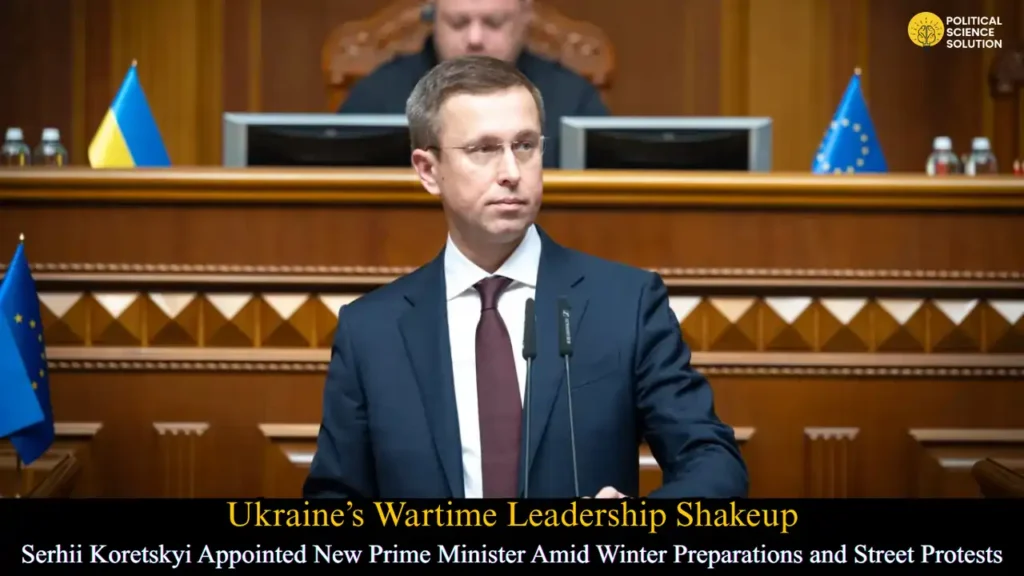
Parliamentary Approval and Immediate Challenges
Ukraine’s Parliament, the Verkhovna Rada, voted overwhelmingly in favor of Koretskyi’s appointment, with 289 lawmakers supporting the move during a regular plenary session. The confirmation unfolded against a backdrop of heightened tensions, as hundreds of protesters gathered outside the parliamentary building in Kyiv to voice opposition to Zelenskyy’s broader government reshuffle. Demonstrators specifically criticized the dismissal of Defence Minister Mykhailo Fedorov, a popular figure credited with advancing Ukraine’s innovative drone technology programs. Critics argued that sidelining Fedorov after only six months in office could undermine ongoing military reforms at a critical juncture in the war.
The protests drew thousands to the streets across Ukraine, highlighting public unease over perceived instability in wartime governance. Fedorov, viewed as an innovator who clashed with traditional military establishments, had become a symbol of modernizing efforts within the defence sector. Zelenskyy’s decision to remove him, alongside other leadership changes, has sparked debates about balancing continuity and fresh perspectives during the ongoing invasion.
Who Is Serhii Koretskyi? A Business-Oriented Crisis Manager
At 48 years old, Serhii Koretskyi (sometimes spelled Sergii) represents a departure from typical Ukrainian political appointees. Unlike many senior officials who rise through party ranks, parliament, or civil service, Koretskyi built his career in the private sector as a trained engineer with over two decades of experience managing fuel and food industries. His reputation as an effective crisis manager stems from successfully reviving struggling state-owned enterprises and transforming them into profitable entities.
In 2022, following the government’s seizure of oil producer Ukrnafta and refinery operator Ukrtatnafta from oligarch Ihor Kolomoiskyi, Koretskyi was appointed to lead both companies. Under his stewardship, Ukrnafta achieved record profits, cleared substantial tax debts, expanded production, and emerged as one of Ukraine’s largest taxpayers. The company played a vital role in the war effort by supplying fuel to the military and funding drone initiatives.
Last year, Koretskyi took the helm at Naftogaz during a particularly difficult period. Gas reserves had plummeted to record lows due to failed import strategies and intensified Russian strikes on production facilities. He initiated a comprehensive audit, leading to sweeping restructuring efforts that eliminated redundant functions and streamlined staffing—moves that faced internal criticism but yielded results. Under his leadership, Naftogaz rebuilt gas reserves to more than 13 billion cubic meters and secured nearly $1 billion in additional funding.
Zelenskyy has praised Koretskyi as “the most prepared candidate” for Prime Minister, emphasizing his expertise in navigating energy crises. As a non-traditional political figure, Koretskyi’s business acumen is expected to be crucial, though observers note that leading a cash-strapped wartime government will demand political skill, diplomacy, and strategic maneuvering beyond corporate management.
Priorities for the New Prime Minister: Energy Security and Wartime Resilience
Koretskyi addressed Parliament immediately after his confirmation, outlining immediate priorities: safeguarding Ukraine’s battered energy infrastructure, stabilizing the economy, ensuring effective use of international aid, and expanding domestic arms production. These focus areas align directly with the nation’s pressing needs as Russian attacks continue to target critical facilities.
The appointment arrives as officials anticipate one of the hardest winters of the war, with Russian forces intensifying assaults on energy systems. Protecting gas reserves, enhancing import security, and accelerating repairs to damaged infrastructure will be paramount. Koretskyi’s experience at Naftogaz positions him uniquely to tackle these challenges, having already demonstrated success in rebuilding reserves and raising funds under duress.
Economically, the new Prime Minister faces the task of managing a war-ravaged budget reliant on foreign assistance. Effective oversight of aid spending will be essential to prevent waste and maintain international support. Additionally, boosting local weapons manufacturing could reduce dependency on allies and strengthen Ukraine’s defensive capabilities.
Context of the Reshuffle: Refreshing Leadership in Prolonged Conflict
This government overhaul reflects Zelenskyy’s strategy to inject new energy into key positions during a protracted war. Svyrydenko’s tenure, though brief, coincided with significant economic pressures. Koretskyi becomes the latest in a series of appointments aimed at adapting to evolving battlefield and domestic realities.
The move has not been without controversy. Protests against Fedorov’s ouster highlight concerns that rapid changes could disrupt military innovation, particularly in drone warfare, which has proven highly effective against Russian forces. Zelenskyy’s administration must now navigate these internal divisions while presenting a united front externally.
Broader Implications for Ukraine’s War Effort
Koretskyi’s background in turning around state energy firms signals a pragmatic approach to resource management. His leadership at Ukrnafta and Naftogaz contributed directly to the war effort through fuel supplies and financial support for military technology. Extending this success to national governance could bolster resilience against Russian energy blackmail and winter hardships.
International partners will closely watch the new Prime Minister’s ability to coordinate aid, maintain economic stability, and advance reforms. Ukraine’s ability to withstand prolonged conflict depends on strong domestic leadership that can both manage crises and inspire public confidence.
As Ukraine enters this new phase of leadership, the focus remains on survival through winter, sustaining military momentum, and laying groundwork for eventual recovery. Serhii Koretskyi’s premiership, though starting amid protests and uncertainty, brings a fresh managerial perspective to one of the most demanding roles in contemporary geopolitics.
The coming months will test whether this business-oriented leader can translate corporate turnaround expertise into effective wartime governance. With energy security at the forefront and public scrutiny high, Koretskyi’s every decision will shape Ukraine’s trajectory in the ongoing struggle for sovereignty.
FAQs
1. Why did President Zelenskyy replace Prime Minister Yulia Svyrydenko?
Zelenskyy pushed out Svyrydenko after her one-year term, citing the need to refresh leadership. The primary focus is preparing Ukraine for a potentially harsh upcoming winter amid intensified Russian attacks on energy infrastructure. Parliament accepted her resignation and quickly approved her successor.
2. Who is Serhii Koretskyi and what makes him qualified?
Serhii Koretskyi, 48, is a trained engineer and former business executive who led troubled state energy companies like Ukrnafta and Naftogaz. He turned them profitable through restructuring, cleared debts, expanded production, rebuilt gas reserves to over 13 billion cubic meters, and raised nearly $1 billion. Zelenskyy called him “the most prepared candidate” for wartime energy priorities.
3. What were the vote results and public reaction?
Parliament approved Koretskyi with 289 votes in favor on July 16, 2026. However, the move triggered protests outside parliament and across Ukraine, mainly opposing the dismissal of popular Defence Minister Mykhailo Fedorov after just six months. Critics fear it could disrupt military reforms and drone technology advancements.
4. What are Koretskyi’s top priorities as Prime Minister?
His immediate focus includes protecting Ukraine’s energy system from Russian strikes, stabilizing the economy, ensuring efficient use of international aid, and expanding domestic arms production. These address the hardest expected wartime winter and long-term resilience.
5. How does this fit into Ukraine’s broader wartime leadership changes?
Koretskyi is Ukraine’s third Prime Minister since the 2022 full-scale invasion. The reshuffle reflects Zelenskyy’s strategy to adapt governance for prolonged conflict, prioritizing crisis management and energy security while navigating public concerns over stability and military continuity.