

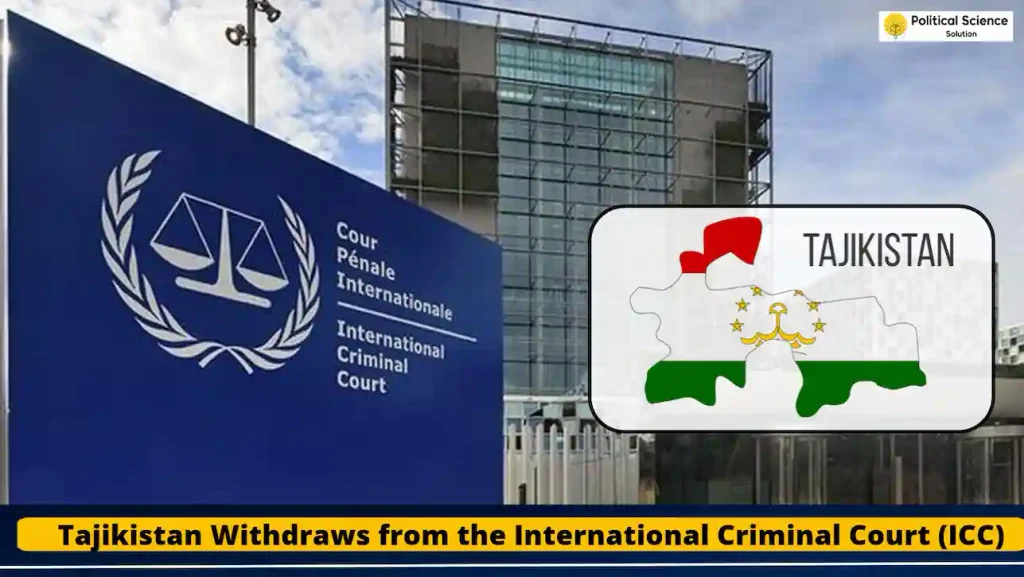
New Delhi: Tajikistan has officially started the process of leaving the International Criminal Court, becoming the fourth country to take this step since the United States launched a diplomatic effort earlier this year aimed at isolating and dismantling the tribunal. The presidency of the ICC’s governing body, the Assembly of States Parties, confirmed the development in a statement released on Monday, November 23, 2026, expressing concern over the decision and its potential impact on international justice efforts.
Withdrawal Process and Timeline
The Central Asian nation of approximately 10.3 million people notified the United Nations of its intention to withdraw from the Rome Statute, the treaty that established the court. Under the statute’s rules, the withdrawal process takes one full year to complete. Tajikistan’s exit is therefore scheduled to take effect on November 20, 2027. Until that date, the country remains a full State Party with all associated rights and obligations.
Other Nations Leaving the Court
This move places Tajikistan alongside Chad, Venezuela, and Naoero—the Pacific island nation formerly known as Nauru—as the countries that have formally begun withdrawal proceedings since the US administration of President Donald Trump intensified pressure on the court in July 2026. At that time, the US State Department publicly called on nations to leave the ICC, describing the institution as an enforcement arm of a “globalist bureaucracy” that threatened national sovereignty. Officials stated the goal was to disable the court’s operations.
The ICC currently lists 125 member states. That figure still includes the seven countries that have initiated the withdrawal process. In addition to the four nations that moved after the US campaign began, Burkina Faso, Mali, and Niger had already announced their intention to leave in 2025. Those three West African countries, all under military-led governments, jointly denounced the court as an instrument of “neocolonial repression.” They formally notified the United Nations of their withdrawals in June 2025, several weeks before Washington’s public diplomatic push.
Failure to Arrest Putin
A key factor in Tajikistan’s case involves the court’s earlier criticism of the country’s failure to act on an arrest request. In March 2026, the ICC found that Tajikistan had not complied with its obligation to arrest Russian President Vladimir Putin during his visit to the country in 2025. Putin remains the subject of an ICC arrest warrant issued over alleged war crimes committed in Ukraine. The court had requested Tajikistan, as a State Party at the time, to detain him if he entered its territory. The failure to do so drew formal rebuke from the tribunal.
Photographs and reports from late November 2026 showed Putin meeting with Tajik President Emomali Rahmon in Dushanbe on November 20, 2026, underscoring the continued close ties between the two leaders even as the withdrawal process advanced.
Assembly of States Parties Response
The presidency of the Assembly of States Parties responded to Tajikistan’s notification with a carefully worded statement. It noted the situation “with concern” and warned that decisions by States Parties to disengage from the Rome Statute risk undermining the collective pursuit of justice and weakening global efforts to end impunity. The statement stressed that withdrawal does not free a state from obligations incurred while it was still a party to the treaty. The presidency called on Tajikistan to remain committed as a State Party, to continue engaging constructively within the Assembly, and to raise any concerns through the established multilateral framework rather than by leaving.
European Union Reaction
The Council of the European Union issued its own reaction, stating that it “regrets” Tajikistan’s decision. The EU highlighted that Tajikistan’s membership had reflected a shared commitment to the rules-based international order, multilateralism, and international justice—values the bloc said lie at the heart of its relations with the country. The European Union strongly encouraged Tajikistan to reconsider and reverse the withdrawal. It affirmed that the EU and its member states remain steadfast in their support for international criminal justice and the fight against impunity, and that engagement with Tajikistan would continue with the aim of strengthening commitment to international law, accountability, and multilateral cooperation.
Background on the International Criminal Court
The International Criminal Court itself was established as the world’s permanent tribunal for prosecuting individuals accused of the most serious international crimes: genocide, crimes against humanity, war crimes, and the crime of aggression. It intervenes when national courts are unwilling or unable to act. The court has no police force of its own and relies on the cooperation of member states to enforce arrest warrants and other orders. This dependence has repeatedly created friction when powerful non-member states or their allies are involved.
US Pressure and Sanctions
The United States has never been a party to the Rome Statute. Russia, China, Israel, and India are also among the major countries that remain outside the court. Under the Trump administration, the US has taken increasingly assertive steps against the ICC. In addition to the July 2026 diplomatic campaign urging countries to quit, Washington has imposed sanctions on ICC judges and prosecutors. These measures followed the court’s issuance of arrest warrants in 2024 for Israeli Prime Minister Benjamin Netanyahu and former Defence Minister Yoav Gallant over alleged war crimes and crimes against humanity in Gaza. The sanctions also related to an earlier ICC investigation into the conduct of US forces in Afghanistan. The US has portrayed these actions as necessary defenses of sovereignty against what it views as overreach by an unaccountable international body.
Broader Debate Over the Court’s Future
Tajikistan’s decision arrives against this broader backdrop of tension between the court and several major powers. Supporters of the ICC argue that withdrawals by member states, particularly those that have faced criticism for non-cooperation, erode the system of international accountability the court was designed to uphold. Critics of the court, including the current US administration and the governments of Burkina Faso, Mali, and Niger, contend that the institution has been selectively applied and has become a tool of political pressure rather than impartial justice.
The one-year waiting period built into the Rome Statute means that Tajikistan will continue to participate in the Assembly of States Parties and remain bound by its existing obligations until November 20, 2027. During this transition, the court and remaining member states will watch closely to see whether other countries follow the path taken by Chad, Venezuela, Naoero, and now Tajikistan, or whether diplomatic efforts by the European Union and other supporters succeed in persuading any of the departing states to reverse course.
For now, the formal notification from Dushanbe marks a concrete expansion of the list of countries stepping away from the tribunal in the wake of the US-led isolation campaign. The Assembly of States Parties has made clear its preference that Tajikistan stay engaged. The European Union has issued a parallel appeal for reconsideration. Whether those calls produce any change remains to be determined over the coming year. What is already established is that Tajikistan has joined a small but growing group of nations formally beginning the process of leaving the International Criminal Court, adding another chapter to the ongoing debate over the future of permanent international criminal justice.
FAQs
1. Why is Tajikistan withdrawing from the International Criminal Court?
Tajikistan notified the United Nations of its intention to leave the Rome Statute. A key factor cited in reporting is the ICC’s earlier finding that the country failed to comply with its obligation to arrest Russian President Vladimir Putin during his 2025 visit, despite an outstanding arrest warrant related to alleged war crimes in Ukraine. The move also occurs amid a broader U.S.-led diplomatic campaign encouraging countries to exit the court.
2. When does Tajikistan’s withdrawal officially take effect?
Under the Rome Statute, withdrawal takes one full year to complete. Tajikistan’s exit is scheduled to become effective on November 20, 2027. Until that date, the country remains a full State Party with all associated rights and obligations.
3. Which other countries have begun the process of leaving the ICC?
Tajikistan is the fourth country to formally start withdrawal proceedings since the United States intensified pressure in July 2026. The others are Chad, Venezuela, and Naoero (formerly Nauru). Earlier, in 2025, Burkina Faso, Mali, and Niger—all under military-led governments—also notified the UN of their intention to leave, describing the court as an instrument of “neocolonial repression.”
4. What role has the United States played in recent ICC withdrawals?
In July 2026, the U.S. State Department publicly called on nations to leave the ICC, describing it as an enforcement arm of a “globalist bureaucracy” that threatens national sovereignty. The administration has also imposed sanctions on ICC judges and prosecutors, particularly following arrest warrants issued against Israeli officials and earlier investigations involving U.S. forces in Afghanistan. The United States has never been a party to the Rome Statute.
5. How have international bodies responded to Tajikistan’s decision?
The presidency of the Assembly of States Parties noted the development “with concern,” warning that withdrawals risk undermining international justice efforts, and urged Tajikistan to remain engaged. The Council of the European Union expressed regret, highlighted shared commitments to the rules-based international order, and strongly encouraged Tajikistan to reverse the decision while affirming continued EU support for the court and ongoing engagement with the country.