

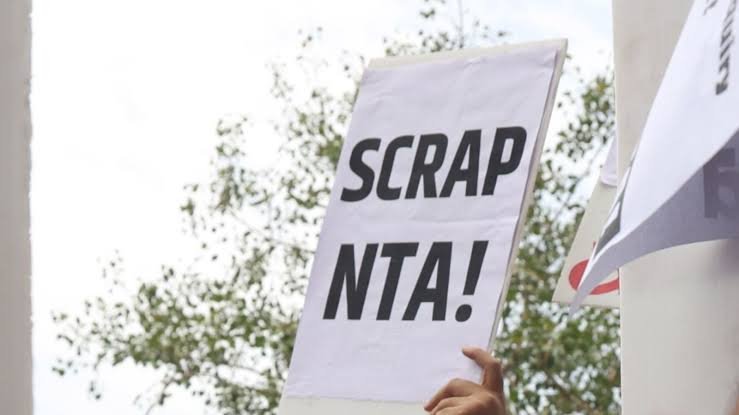
New Delhi: The National Testing Agency (NTA), established to streamline and standardize entrance examinations in India, has once again found itself at the center of a major controversy with the Common University Entrance Test for Postgraduate Programmes (CUET PG) 2026. What was intended to be a fair, transparent gateway to postgraduate education in central and participating universities has turned into a saga of alleged data manipulation, lack of transparency, technical failures, and broken trust. Students across the country are voicing outrage, dubbing it the “CUET PG 2026 Scam,” amid claims of altered response sheets, undisclosed re-examinations, faulty answer keys, and opaque normalization processes.
Background of CUET PG and NTA’s Role
CUET PG, introduced to centralize admissions for postgraduate courses, is conducted by the NTA in Computer-Based Test (CBT) mode. For the 2026 cycle, the exam was scheduled primarily from March 6 to March 27, 2026, covering 157 subjects across multiple shifts and centers. It aimed to provide a single-window opportunity for admissions to programs in central universities and other institutions.
The NTA’s mandate is to ensure fairness, but recurring issues in high-stakes exams like NEET, JEE, and now CUET have eroded public confidence. The 2026 CUET PG episode comes against the backdrop of the 2024-2026 NEET controversies, including paper leaks and cancellations, amplifying scrutiny.
Key Allegations: The Anatomy of the Alleged Scam
1. Discrepancies in Provisional Response Sheets and Altered Answers
One of the most widespread complaints involves the provisional response sheets released by the NTA. Numerous candidates reported that their marked options appeared changed or marked as “not attempted” when compared to what they remembered selecting during the exam. Scores plummeted dramatically in many cases—from expected 190+ to as low as 127 or even single digits in some papers.
Students shared experiences on platforms like Reddit: “The answers that I checked on my way home were marked not answered and in some, wrong options were marked.” Others alleged data loss, with one user questioning if the NTA “lost data and just randomly fill[ed] the answers.” Provisional sheets were available only briefly (2-4 days) before disappearing, limiting challenges.
The objection process required a fee of Rs. 200 per question, which candidates viewed as unfair given the agency’s alleged errors. Emails to NTA often went unanswered, fueling perceptions of accountability evasion.
2. Undisclosed Re-Examinations and Hidden Data
A significant controversy erupted over exams allegedly conducted on additional dates like March 29-30 without public notification. For subjects such as General (Law), Economics, and others, students noticed discrepancies between initial notifications (up to March 28) and answer keys or data referencing later dates.
YouTube analyses and social media posts highlighted “hidden” data in result releases. Why was no official notice issued for these sessions? Critics argue this breached transparency and raised questions about normalization—how can scores from exams held weeks apart be fairly equated without proper disclosure? Allegations of repeated questions in later shifts further intensified suspicions of favoritism or poor planning.
NTA’s failure to communicate these details promptly led to accusations of concealing irregularities to avoid mass backlash.
3. Faulty Answer Keys and Result Delays
The provisional answer key faced heavy criticism for errors. Candidates reported mismatches in question IDs, incorrect official answers, and inconsistencies across shifts. Results, originally slated for around April 13, were delayed until early May, adding to anxiety during admission seasons.
In some cases, marks were adjusted mysteriously post-challenge window, echoing past CUET issues like abrupt normalization or shift-based discrepancies in previous years.
4. Technical Glitches and Broader Systemic Failures
While CUET PG 2026 avoided the massive leaks seen in NEET 2026, technical issues persisted—delayed starts, server problems, and biometric failures at centers. These compounded the perception of an agency struggling with execution despite its scale.
Student Impact and Voices from the Ground
The human cost is immense. Postgraduate aspirants, many from modest backgrounds, invest months or years preparing. A ruined score can derail careers, force gap years, or push students toward expensive private options. Social media and forums are filled with despair: students expecting top central universities now face uncertain futures.
One Reddit user noted high scores in certain subjects (e.g., 240+ in Political Science) contrasted sharply with affected candidates’ plummeting marks, raising equity concerns. Protests, petitions, and calls for re-examination or judicial intervention have gained traction, with hashtags like #CUETPGScam and #NTA answering trending.
NTA’s Response (or Lack Thereof)
The NTA has released results and final keys but provided limited detailed explanations for the specific grievances. Official statements emphasize smooth conduct in many centers and adherence to protocols, but critics argue this sidesteps core issues like data integrity and communication failures. No major independent probe has been announced specifically for CUET PG 2026 as of now, unlike NEET cases.
This silence contrasts with the agency’s mandate for transparency and has invited comparisons to “Not Trusted Agency.”
Historical Context: A Pattern of Controversies
NTA’s track record includes JEE glitches, NEET irregularities, and previous CUET issues (e.g., 2023 shift divisions and unexplained mark hikes). CUET PG 2026 fits into a larger narrative of over-reliance on a single agency without robust safeguards, digital vulnerabilities, and insufficient oversight.
Political opposition and education experts have called for reforms: decentralizing exams, stronger cybersecurity, real-time auditing of CBT systems, and independent regulatory bodies.
The Way Forward: Reforms and Accountability
To restore faith:
- Independent Audit: A CBI or parliamentary probe into CUET PG 2026 processes, focusing on response sheet integrity and undisclosed sessions.
- Transparency Measures: Mandatory detailed notifications for all exam dates/shifts, longer challenge windows, and public dashboards for data.
- Technological Upgrades: Blockchain for answer recording, AI proctoring, and better vendor oversight (e.g., TCS glitches).
- Policy Changes: Potential shift to multiple annual attempts with normalized difficulty, or hybrid models reducing single-exam stakes.
- Student Support: Grace marks or re-tests for verifiable affected candidates, and counseling for mental health.
Universities should consider alternative admission criteria or relaxed cut-offs where irregularities are proven.
Conclusion: Rebuilding Trust in Meritocracy
The CUET PG 2026 controversy is not just about one exam cycle; it questions the foundation of merit-based admissions in India. When lakhs of aspirants lose faith in the system designed to uplift them, it risks talent drain, increased coaching dependency, and social unrest.
NTA and the Ministry of Education must act decisively—acknowledge lapses, compensate affected students, and implement systemic fixes. Without urgent reforms, “scam” allegations will persist, undermining the very purpose of national-level testing. Students deserve a system where preparation, not procedural failures, determines destiny. The ball is in the government’s court to prove that CUET remains a tool for equity, not another chapter in entrance exam woes.
FAQs
Q1. Why are students calling it the “CUET PG 2026 Scam”?
Students have alleged serious irregularities, including discrepancies in response sheets, answers being marked incorrectly or as “not attempted,” faulty answer keys, undisclosed examination sessions, and a lack of transparency in the result and normalization process. These issues have led many candidates to question the credibility of the examination.
Q2. What are the main allegations against the National Testing Agency (NTA)?
The key allegations include altered response sheets, incorrect answer keys, inadequate communication regarding additional examination dates, limited access to response sheets, unexplained score variations, and failure to adequately address student grievances through official channels.
Q3. What is the controversy regarding undisclosed re-examinations?
Many candidates claim that examinations for certain subjects were conducted on additional dates that were not publicly announced in advance. Critics argue that the absence of transparent communication raises concerns about fairness, normalization, and equal treatment of all candidates.
Q4. How have these alleged irregularities affected students?
Students report significant score drops compared to their expected performance, creating uncertainty regarding admissions to universities. Many fear losing academic opportunities, scholarships, and a full academic year due to issues they believe were beyond their control.
Q5. What are students and education experts demanding now?
Students and experts are demanding an independent investigation, greater transparency in the examination process, public disclosure of all exam-related data, correction of genuine errors, accountability from officials, and systemic reforms to restore trust in national-level entrance examinations.