

New Delhi: As India grapples with escalating environmental pressures, water security has emerged as one of the most pressing challenges of the 21st century. With a burgeoning population and intensifying climate variability, the nation’s freshwater resources are under unprecedented strain. Recent analyses highlight alarming trends: 11 out of 15 major river basins are already experiencing water stress, where annual availability dips below the 1,700 cubic meters per person threshold that signals vulnerability. Basins like the Krishna, Cauvery, Mahi, and Tapi have plunged even deeper into scarcity territory, falling under 1,000 cubic meters per person.
This is no longer a seasonal issue confined to dry spells. What was once viewed as a temporary inconvenience has morphed into a permanent structural risk, endangering households, agricultural productivity, industrial operations, and the economic vitality of major urban centers such as Bengaluru and Delhi. Urban water shortages are particularly acute. In Delhi, for instance, the actual supply has dropped to approximately 70% of the daily demand, which stands at around 1,250 million gallons. Cities across the country, from Bengaluru to Mussoorie in Uttarakhand, are confronting severe stress exacerbated by erratic weather patterns.
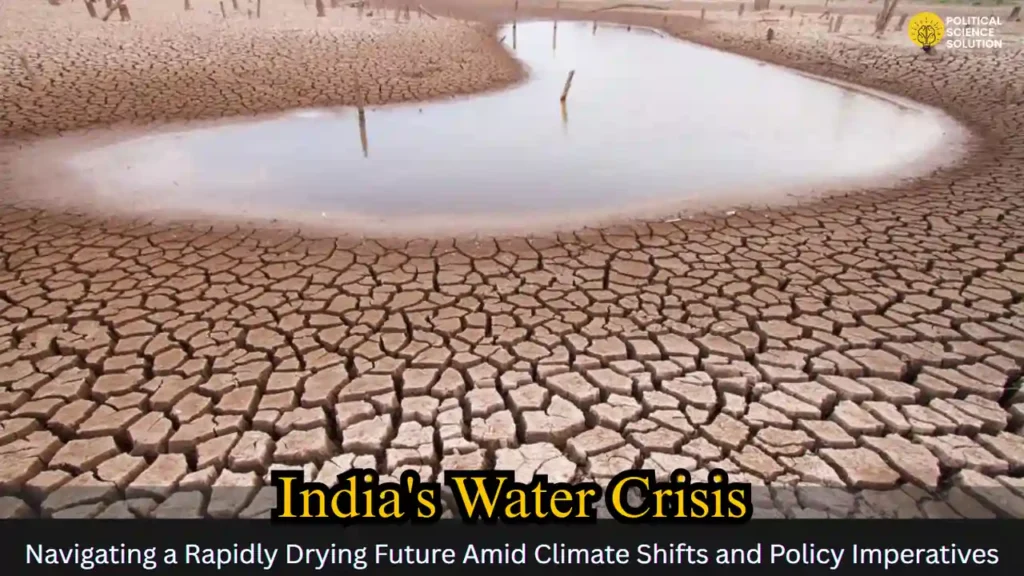
Root Causes: A Perfect Storm of Demographic, Climatic, and Infrastructural Factors
India’s water woes stem from a fundamental imbalance. The country supports nearly 18% of the global population yet possesses only about 4% of the world’s freshwater resources. This disparity is compounded by highly seasonal rainfall, with roughly 70% of annual precipitation concentrated in just three months during the monsoon. Such uneven distribution makes water availability precarious across seasons and regions.
Climate phenomena like El Niño have further intensified the problem. June 2026 witnessed a monsoon rainfall deficit exceeding 40% in many areas, pushing already vulnerable systems to the brink. Global reports, including one from the United Nations University Institute for Water, Environment and Health (UNU-INWEH), paint a dire picture of “water bankruptcy” worldwide. Polluted river basins with no outflow to the sea, over-depleted aquifers, and nearly four billion people facing severe scarcity for at least one month annually underscore the scale of the issue. In India, infrastructure gaps amplify these natural challenges: only about 30% of wastewater receives treatment according to Central Pollution Control Board (CPCB) data, leading to widespread pollution and high conveyance losses in distribution networks.
Poor maintenance of supply systems, low cost recovery for water services, and inadequate governance further erode resilience. The result is a cascading threat to food security, public health, and economic growth, particularly in water-intensive sectors like agriculture, which remains the backbone of rural livelihoods.
Building Resilience: Innovative Strategies for a Water-Secure India
Addressing this crisis demands a multifaceted approach that integrates climate adaptation, technological innovation, and policy reform. Experts emphasize “climate-proofing” critical infrastructure through detailed risk mapping. This involves protecting urban assets like power grids, schools, and hospitals in flood-prone or coastal zones. Leveraging mechanisms such as the Urban Challenge Fund (UCF) can help finance resilient municipal systems, as demonstrated by Visakhapatnam’s receipt of ₹1,501 crore for water supply and drainage upgrades.
A shift toward a circular water economy is equally vital. Treating and reusing wastewater for non-potable needs—such as construction, landscaping, industrial cooling (including data centers), and even revenue-generating applications—can significantly alleviate freshwater pressure. The Thane Municipal Corporation exemplifies this by utilizing treated water to offset deficits while generating additional income. Projections from the Council on Energy, Environment and Water (CEEW) suggest that scaling wastewater reuse could unlock an economic opportunity worth ₹3 lakh crore and create nearly one lakh jobs by 2047.
In agriculture, where water demand is highest, expanding micro-irrigation beyond the current 20% coverage is crucial. This requires redesigning subsidies to benefit smallholder farmers (considering units as small as 0.4 hectares), promoting low-water, high-value crops like horticulture and oilseeds, and strengthening insurance schemes such as the Pradhan Mantri Fasal Bima Yojana (PMFBY) for quicker claims processing.
Data and monitoring form the backbone of effective management. India boasts strong data on raw water availability but lags in tracking actual withdrawals, losses, and consumption at the river basin scale. Deploying AI for real-time monitoring of conveyance systems, installing smart meters (modeled on the success of over 4.93 crore smart electricity meters), and generating granular basin-level insights can close these gaps and enable precise interventions.
The Monsoon Myth and the Power of Policy
While the monsoon remains a lifeline, it cannot single-handedly resolve India’s water predicament. As Nitin Bassi and colleagues at CEEW have noted, robust policy frameworks, transparent governance, and public participation are indispensable. Investments in resilient infrastructure, circular practices, efficient irrigation, and data-driven decision-making must be prioritized to safeguard human well-being, livelihoods, and ecosystems.
For aspirants preparing for competitive examinations like the UPSC, this topic intersects key areas of GS-2 governance, highlighting the interplay between climate change, resource management, and sustainable development. Effective water security demands political commitment at all levels to translate strategies into tangible outcomes.
As India hurtles toward a drier future, the window for decisive action is narrowing. By embracing innovation, equity, and foresight, the nation can transform its water challenges into opportunities for resilient growth. The stakes could not be higher—for households, farms, cities, and the very sustainability of one of the world’s fastest-growing economies.
Frequently Asked Questions (FAQs)
1. What is the current state of water stress in India’s major river basins?
According to research by the Council on Energy, Environment and Water (CEEW), 11 out of 15 major river basins in India are experiencing water stress, with annual availability below 1,700 cubic meters per person. Several basins, including the Krishna, Cauvery, Mahi, and Tapi, have already crossed the severe scarcity threshold of less than 1,000 cubic meters per person. This situation is worsened by climate variability and over-extraction.
2. Why is Delhi and other Indian cities facing acute water shortages?
Urban centers like Delhi are receiving only about 70% of their total daily water demand (around 1,250 million gallons). Factors include declining groundwater levels, high conveyance losses in aging infrastructure, inadequate wastewater treatment (only 30% treated nationally), and monsoon deficits—such as the over 40% shortfall in June 2026 influenced by El Niño. Similar stresses affect Bengaluru, Mussoorie, and other cities.
3. How can wastewater reuse help achieve water security?
Shifting to a circular water economy by treating and reusing wastewater for non-potable uses (e.g., industrial cooling, construction, landscaping) can reduce freshwater demand significantly. Initiatives like those by the Thane Municipal Corporation demonstrate revenue generation and deficit reduction. CEEW estimates this approach could create an economic opportunity of ₹3 lakh crore and nearly one lakh jobs by 2047.
4. What role does micro-irrigation play in addressing agricultural water use?
Agriculture consumes the bulk of India’s water. Expanding drip and sprinkler systems beyond the current 20% coverage is essential. This involves redesigning subsidies for small and marginal farmers (base unit of 0.4 hectares), promoting low-water high-value crops, and strengthening crop insurance under PMFBY for faster claims. Such measures can dramatically improve water-use efficiency.
5. Why is better data and AI important for long-term water management?
India has good data on water availability but limited metrics on actual withdrawals, losses, and consumption at the basin level. Generating reliable river basin-level data using AI for monitoring leaks, smart meters, and precise accounting (inspired by the electricity sector’s smart meter rollout) is critical for closing gaps, reducing waste, and informing targeted policies.